


Without warning, bullets came flying through the windows.
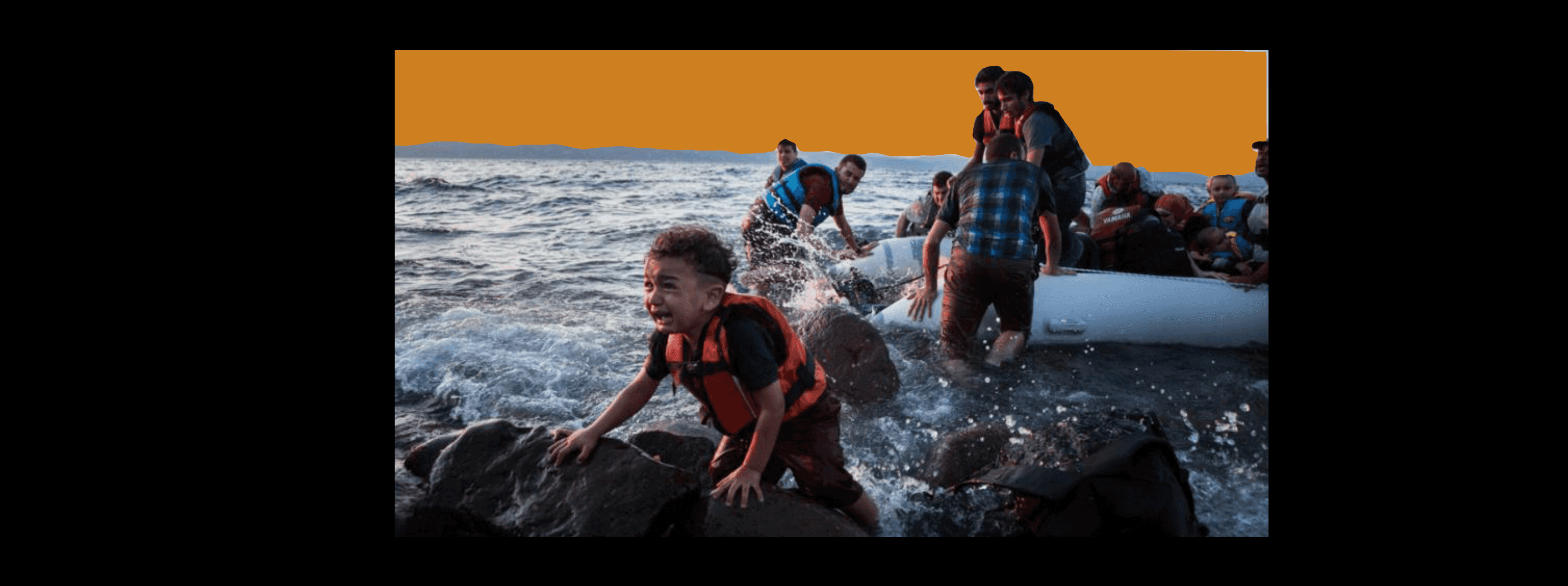
It was a sweltering summer afternoon in the Mediterranean Sea. The rescue ship Ocean Viking had 87 people aboard, rescued from distress at sea whilst attempting a perilous crossing to Europe. The ship was on its way to another rescue when it was attacked by Libya’s Coast Guard.1
The twenty-minute attack put everyone on board at lethal risk, caused extensive damage to rescue equipment, and subjected people who had just found sanctuary from war and persecution to yet another ordeal. What the mostly-European rescue crew did not yet know was that they were shot at from a boat their own taxes paid for.

The shooters’ vessel, a Corrubia-class patrol boat, was one of several transferred to Libya from Italy under a programme funded by the European Union to aid in what it euphemistically calls “migration management.”2 This incident, while shocking, was not unprecedented. Multiple shootings have taken place since, the latest in May 2026 - after which the Italian state launched a criminal investigation not into the attackers, but against the rescue captain.3
The rescue crew protested what they argued was a misuse of public funds. But their objections fell on deaf ears. EU officials not only dismissed their concerns, but committed to increasing funding to both the Libyan state and the militias of the unrecognised Eastern Libyan rival state to combat migration.4 5 They insisted that such funding would ensure that Libyan authorities better respected people’s human rights, whilst also ensuring stronger border enforcement.
A decade of funding 6 shows the weakness of both these claims. After NATO’s 2011 intervention in Libya left behind a power vacuum and civil war, European interests developed close relationships with Libyan militias to secure their access to oil7; relationships evolved into instrumentalising militias to intercept people using Libya as a transit point during migration to Europe. Europe helped create the conditions for a circular economy of destruction where militias profit simultaneously from the smuggling and trafficking, detention and enslavement, and interception of people seeking safety.8 The EU claims that the persistence of crossings and deaths at sea is evidence that this system needs further investment, rather than evidence of its failure.
But what if that failure were a feature of the system itself? What if its architects — in Brussels, as across the capitals of southern EU Member-States — understood these human costs, and calculated them into their plans on purpose? How can we make sense of so much avoidable death on the Mediterranean coast of the ‘civilized’ continent?
This case study examines Europe’s new political economy of border violence. Itidentifies how people are pushed into risky journeys by poverty and limited opportunities, persecution, war, and environmental breakdown, and are exploited and endangered along their routes for profit, whether by petty criminals, multinational border and surveillance companies, or politicians scapegoating them as part of a strategy to gain power.
The case also delves into the ways powerful states exploit the chaos left by their own interventions, using fragile environments to pursue extreme and experimental forms of control, and how neocolonial elites collude with proxies in these fragile environments around a geopolitical strategy built on violence and extraction.
The Axes of Externalisation
If the Euro-Libyan affair was an isolated incident, it would be worrying enough. But it is one example of dozens9 involving the EU and Member States travelling the world cutting deals to prevent people from migrating, with little regard for people’s safety and rights. These processes involve supporting forces engaged in serious human rights abuses, including arbitrary detention, unlawful deportation, torture, violence, trafficking and modern slavery. They also often involve extending neocolonial relationships10 between European states and their former imperial possessions; bribing or coercing former colonies into new roles as external border police and reanimating colonial hierarchies for a new age.
As well as harming people migrating, the externalisation regime cements alliances between reactionaries and authoritarians inside and outside Europe, and involves vast transfers of wealth from the public to the coffers of militaries, police forces, and surveillance and arms companies. Creating danger and death for people migrating, many who were initially forced to flee by the consequences of exploitation and extraction, has become another source of profit for the forces behind such exploitation.
Defenders of the European Union often see it as a bulwark against Trumpism: a standard-bearer for liberal values and the rule of law in an age of chaos. In fact, through border militarisation and rearmament, it is seeking to become a more traditional “hard” power, meaning a confluence of ideas, and political and financial interests.
Researchers have previously theorised a “border-industrial complex” in parallel to the military-industrial complex. But as migration enforcement becomes embedded across politics, international diplomacy and business, and the distinction between arms, border, tech, and surveillance firms breaks down, it is easier to think of the externalised border machine as an organ inseparable from a wider body of securitarian power.
This organ includes radical right figures driving hostile migration discourse and policy, mainstream liberal and centre-right governments or supranational institutions implementing such policy, states and security forces, and private actors. In turn, authoritarian leaders have sought to use attacks on (relatively low amounts of) irregular migration to trial wider clampdowns on rights and liberties of citizens as well as those of immigrants, and divert state capacities from welfare to warfare.
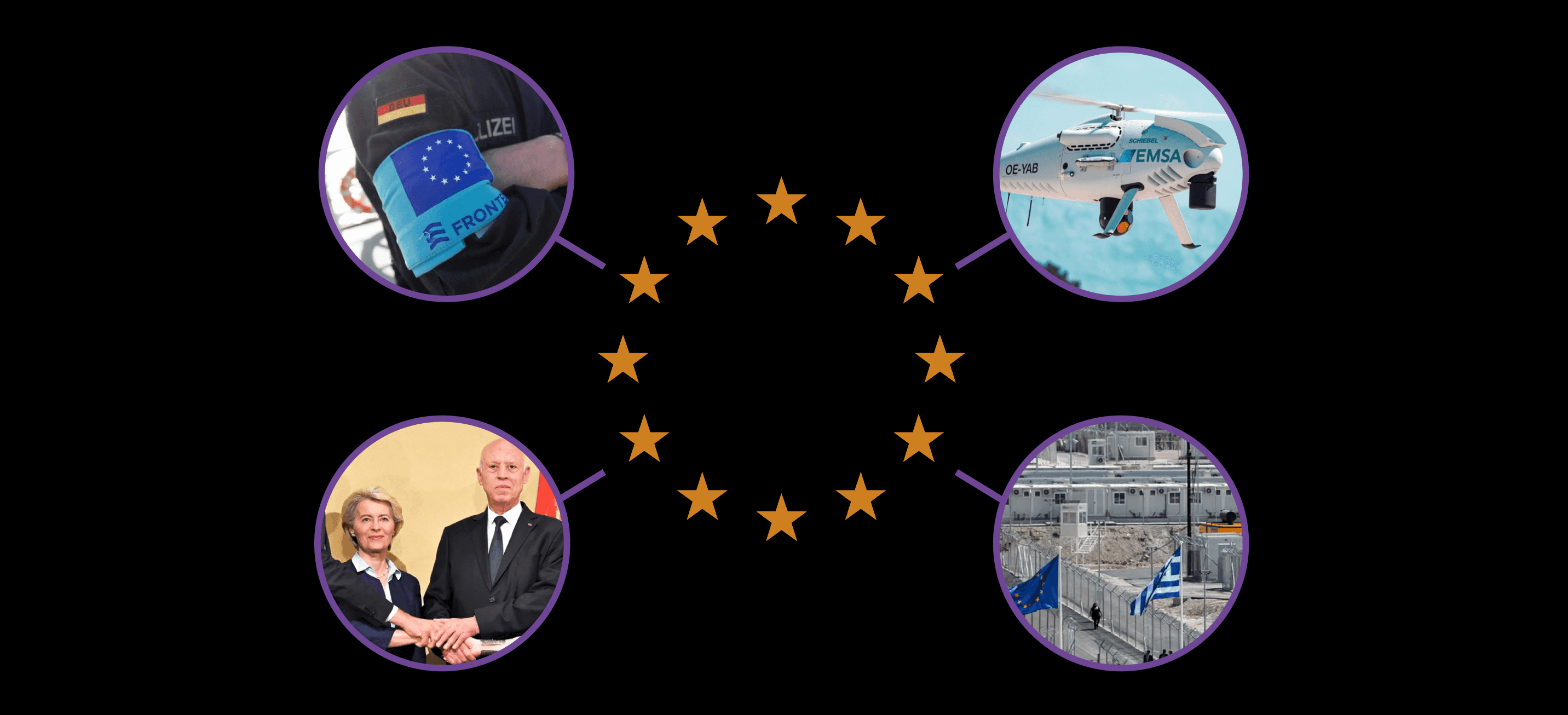
Externalisation extends this machine’s capacities, through shared interests or coercion binding actors in dozens of countries across all continents. In the last two decades, this has occurred principally (if not entirely) through four interdependent and overlapping structures:
- Arming Abuse: Funding, training, and operational cooperation with violent armed groups and security forces to control migration.
- Carrot and Stick Politics: Foreign policy that rewards countries who accept subordination to and alignment with European border regimes, and punishes those that do not.
- Mass Surveillance Machinery: Deploying equipment, collecting data, and creating “interoperable” systems to surveil people migrating (and increasingly, people in general).
- A Detention Camp Empire: Creating carceral infrastructure outside EU borders to process deportees, outsource asylum responsibilities, or prevent people moving.
The people in the firing line of this system are fleeing war, persecution, or the immiserating consequences of a global economy that is unequal by design. They did not create a system where wealth flows from poorer people in poorer countries to elites in wealthy ones. The decision to migrate is often not a choice, or at least the least worst choice of a poor menu of options. It adds insult to injury that the forces responsible for the same extractive economy that creates exploitative migration arrangements now also gain further wealth and power from attacking people on the move.
Arming Abuse
When Libya’s security forces intercept and drag people back at Europe’s behest, they are subsequently returned to brutal prisons, or, as revealed in a 2024 Lighthouse Reports investigation11, left for dead in deserts.
Similar stories are common across the region. In Morocco, authorities often make sudden mass arrests of (mostly Black) people with irregular migration status and immediately deport them with buses to the desert in no-man’s-land between borders, often leaving them without food, water, or shelter. The arrests often seem to be random, with Moroccan police rounding up even registered refugees.
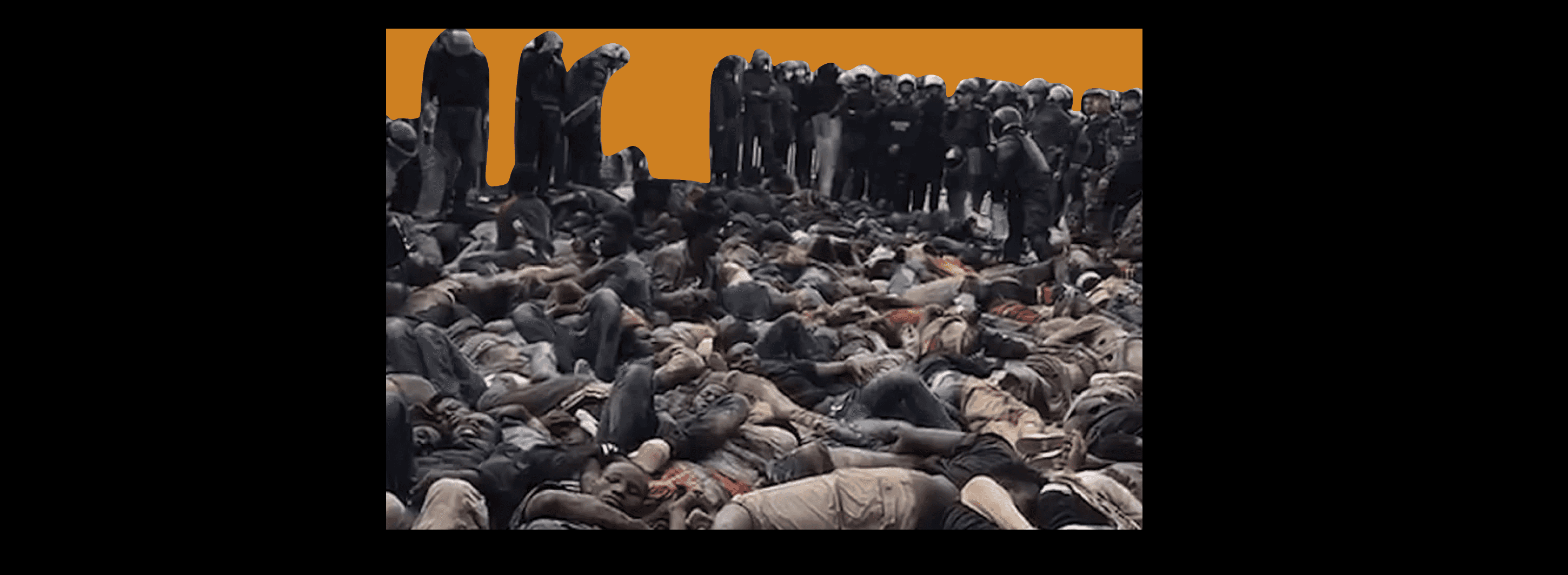
Between 2014 and 2022, the EU spent over €2 billion on migration cooperation12 with Morocco. In June 2013, Morocco and the EU signed a Mobility Partnership, setting out a series of political objectives and possible initiatives for ‘migration management’, including for ‘combating illegal immigration’. An annual meeting of the Frontex-Morocco Comité Mixte agrees on a roadmap for joint activities including deportations. The Morocco-Spain border was the site of the 2022 Melilla massacre, in which security forces attacked people trying to cross, leading to the largest loss of life at a European land border in living memory.13
“You have to make migrants’ lives difficult. Complicate their lives. If you leave a migrant from Guinea in the Sahara [in Morocco] twice, the third time he will ask you to voluntarily bring him back home.”
Consultant for an EU Trust Fund project quoted in Lighthouse Reports’ investigation
In July 2023, the EU promised over €1 billion in support for the struggling Tunisian economy, with €105 million set aside for migration control. This followed a racist tirade by authoritarian president Kais Saied, featuring “Great Replacement”-style conspiracy theories targeted at Black people migrating.
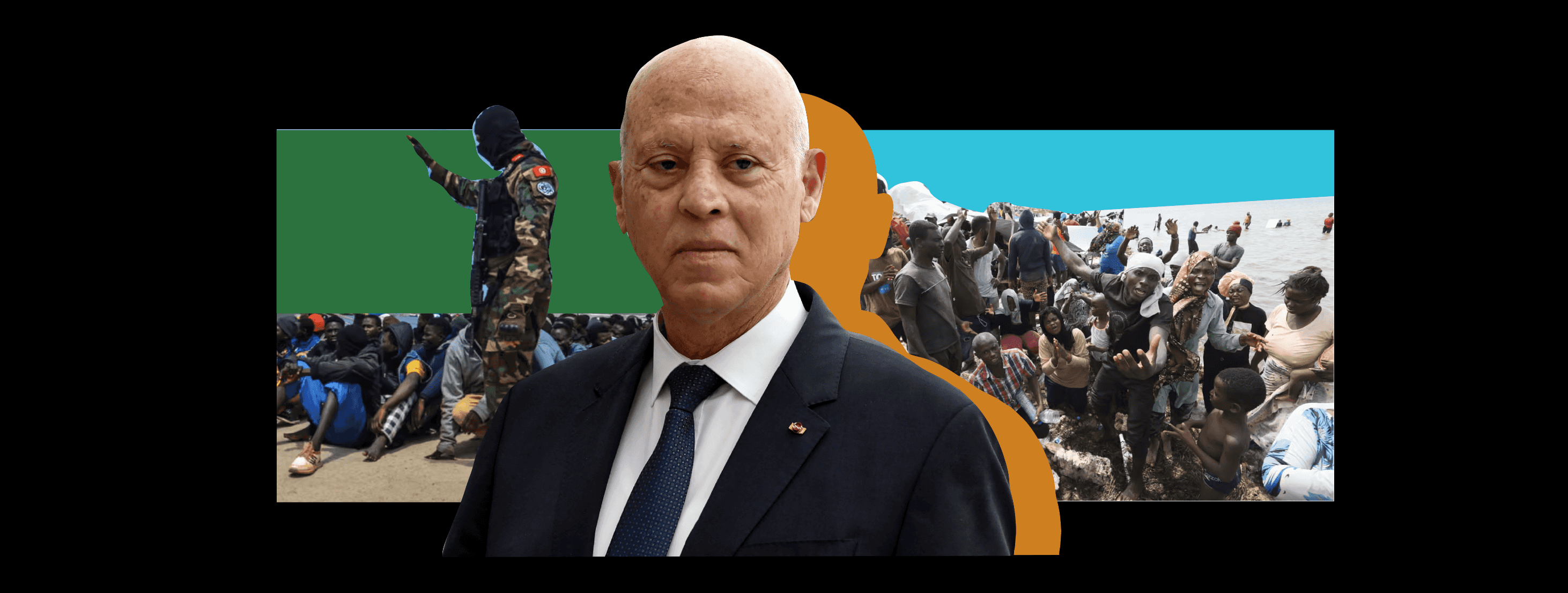
Black Tunisians and migrants alike were attacked by security forces and vigilantes. The situation continues to deteriorate. 2025 research reveals14 it is a regular practice of Tunisian border authorities to sell arrested people to Libyan militias. There have also been reports15 of mass rape of women migrating by EU-funded Tunisian security forces.
Further south, given grim conditions on the Central Mediterranean migration route, some people attempt instead to migrate to the Canary Islands from the African coast, a more dangerous journey. The EU has sought Mauritania’s compliance in preventing these crossings. Operational cooperation includes joint patrols16, and primary partner Spain also funded the establishment of the only migrant detention center in Mauritania. Mauritania's armed forces, by April 2025, had received €47 million worth of support under the European Peace Facility, including surveillance equipment and a patrol boat.17
In March 2025, Mauritanian authorities began ramping up mass deportations.18 People - including those with valid residence permits - were taken to border posts identified as their point of entry into Mauritania, and forced out of the country, in a series of flagrant rights violations. Human Rights Watch has monitored violations including torture, rape, arbitrary arrests and detention; extortion and theft.19
Similar stories can be found as far afield as Egypt, Lebanon, and Turkey, and notably in war-torn Sudan, where the genocide-linked Rapid Support Forces militia allegedly benefitted from EU migration control funding.20
The EU’s internal border forces likewise face allegations of violence and sometimes complicity in deaths; in Greece, Poland, Croatia, and France. This system should not only be seen as the outsourcing of violence to countries with weaker human rights frameworks than Europe, but also a continuum of violations built by a system that stretches both deep into and outside the European Union.
Carrot and Stick Politics
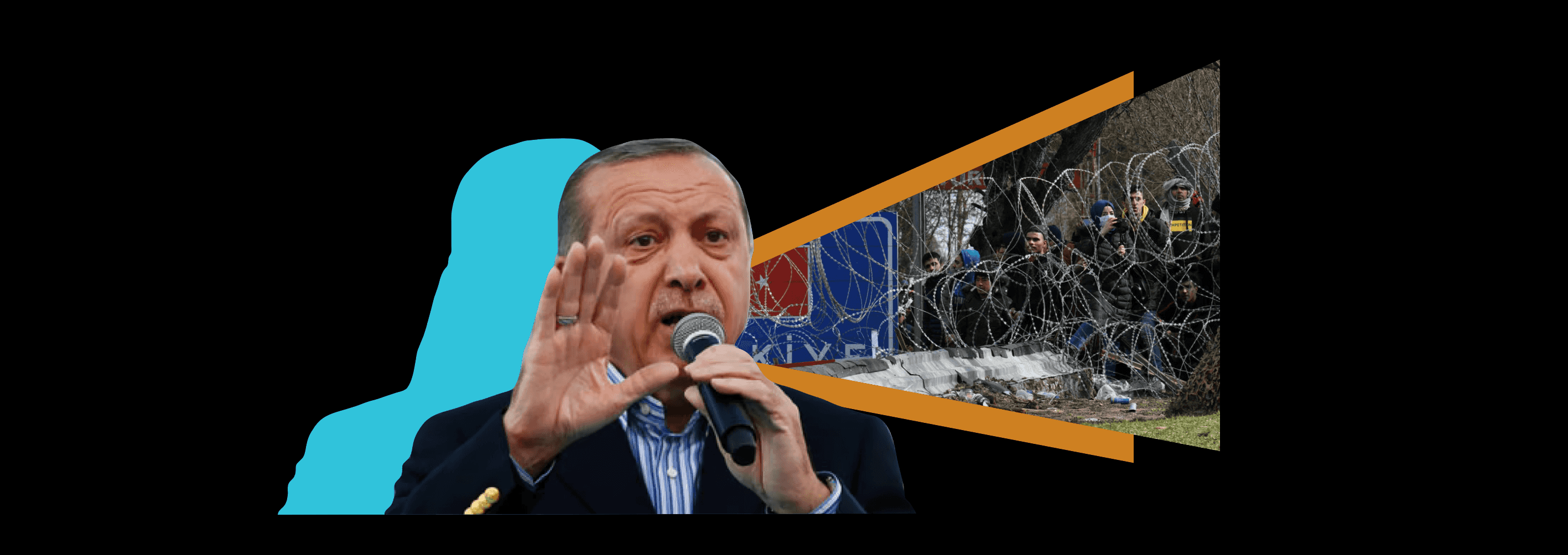
In March 2020, just as the coronavirus pandemic was beginning, Turkish president Recep Tayyip Erdoğan relaxed controls at his country’s border with Greece. The ensuing increase in people crossing into the EU via Greece prompted a panicked and violent response; with people shot at, beaten, and marooned at sea21 as the EU funnelled in support.
Erdoğan’s move was in response to what he saw as the EU’s failure to uphold its end of a deal made between Brussels and Ankara - money, preferential visa access, and eventual entry to the EU in return for acting as Europe’s border policeman.
From 2016 onwards, the EU committed €6 billion to Türkiye for refugee reception capability and facilitating the deportation of people who had crossed into Greece (which was never properly implemented.) It funded vehicles to patrol a new Turkish border wall longer than Donald Trump’s, funded Turkish security forces that illegally pushed refugees back into war-torn Syria, and again, supported the expansion of an archipelago of violent prison camps.22 23
The EU-Türkiye deal contains the core elements of Europe’s wider diplomatic strategy, which has accelerated intensively in the past years. (A researcher for the pro-European Jacques Delors Centre has analysed the extent to which coercive migration diplomacy is seriously undermining other foreign policy aims.24)
States that allow the EU to dictate their border policies and accept integration into Europe’s migration control machine are rewarded with preferential migration treatment and development finance. Those that do not accept the carrot, meanwhile, get the stick.25
The EU-Türkiye deal also assisted the wider repressive capacities of the Turkish state, and provided an incentive26 for European officials to mute their criticisms of Erdoğan’s rising authoritarianism and human rights abuses across the board - a dynamic also seen in Egypt, Morocco, and beyond.
The imposition of tighter border controls on (formerly colonial) regions leads to absurd double standards; Europe preaches the benefits of free movement within its own Schengen area, whilst demanding that West African countries impose tighter border controls27 within their economic cooperation zone.
One striking example is in Niger, where under EU pressure, the government introduced a controversial anti-smuggling law in 2015. In practice, it made people crossing more reliant on dangerous routes and professional smugglers to avoid enforcement - whilst upsetting locals who found themselves harassed and arrested by (often corrupt) security forces, and often treated as smugglers simply for offering taxi rides.28
Traditionally, people had moved freely around the border region, and restrictions also damaged the local economy. The law’s implementation was widely condemned.29 Some have said the backlash to this law was a factor in the country’s 2023 coup, whose leaders repealed the law. Subsequent research has suggested the area is now safer for refugees and people migrating.30
In Egypt, too, the EU has had a strong hand in the drafting of migration and asylum legislation.31 Egyptian asylum law has since abolished basic protections, pushing many into poverty and exploitation.32
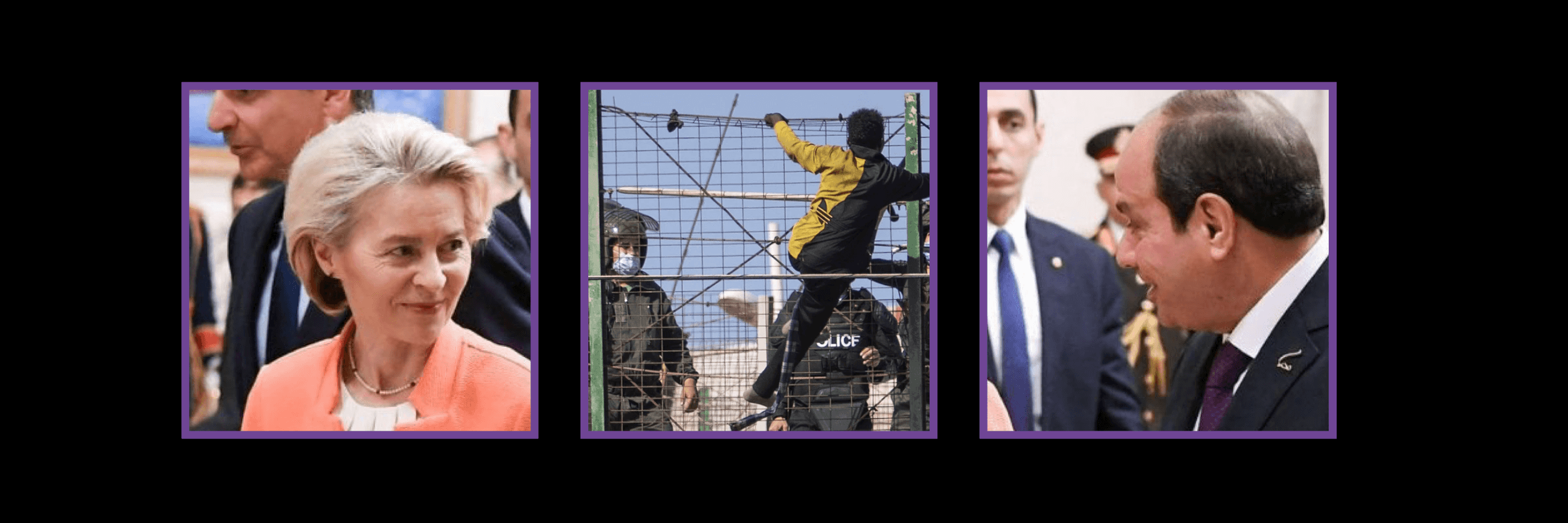
The multi-billion EU-Egypt deal signed in 202433 allows a glimpse at the wider system; migration was only a small part of the deal - which involved finance that could help shore up Egypt’s military government against widespread domestic dissent, helped secure European access to energy riches, and provided ample space for European security contractors to access the lucrative markets of a country where military and security forces play an outsize role.
For the migration part, the EU presumably hoped that its investment would ensure Egypt prevented refugees from genocides in Palestine and Sudan from crossing to Europe. (It seems to have given less consideration to the role of the Egyptian regime in causing Egyptians to flee.)
The EU provided €200 million for Egyptian border control, including funding to the Egyptian Coast Guard for ‘capacity strengthening’. EU-backed Egyptian border guards have meanwhile been accused of mass deportations and abuse of Sudanese refugees, and violence in the militarised zone on the Sudanese border.34
In both the Egyptian and Turkish cases, funding for migration control came directly from the EU’s core budget. In the Turkish one, this included support from pre-accession funds for countries seeking to join the EU. This adds another contradictory layer to externalised coercive diplomacy; in the Balkans and Türkiye, countries are expected to comply with EU border policies as a condition of their entry to the bloc. However, they are only useful as containment zones for people migrating when outside the bloc.
“They were grabbed by the police and beaten with fists and kicked. The respondent was beaten for ten minutes, causing him to be unable to walk. The police officers also threw away his food and water…the officers then drove the interviewee and the family for two hours back over the Montenegrin border.”
From a report35 by the Border Violence Monitoring Network on border violence in Bosnia, which seeks to join the EU.
Much of the funding for externalised migration policy is also framed as development finance. For example, funds to control migration routes to Europe are security sector reform programmes which ostensibly aim to build more competent law enforcement capacity. This packages violence against people migrating as “aid”, whilst also coercing economically struggling countries into compliance in return for aid.
For people migrating, this system turns violence against them into the currency of multilateral diplomacy. For countries outside Europe, it turns them into holding pens to manage movement on behalf of their former colonisers, when they are often far less equipped than European countries to assist refugees. For European states, it increases their strategic dependence on highly unstable and unreliable autocrats.
The only winners remain reactionary leaders, violent enforcement agencies, and private sector profiteers both within and beyond Europe.
Mass Surveillance Machinery
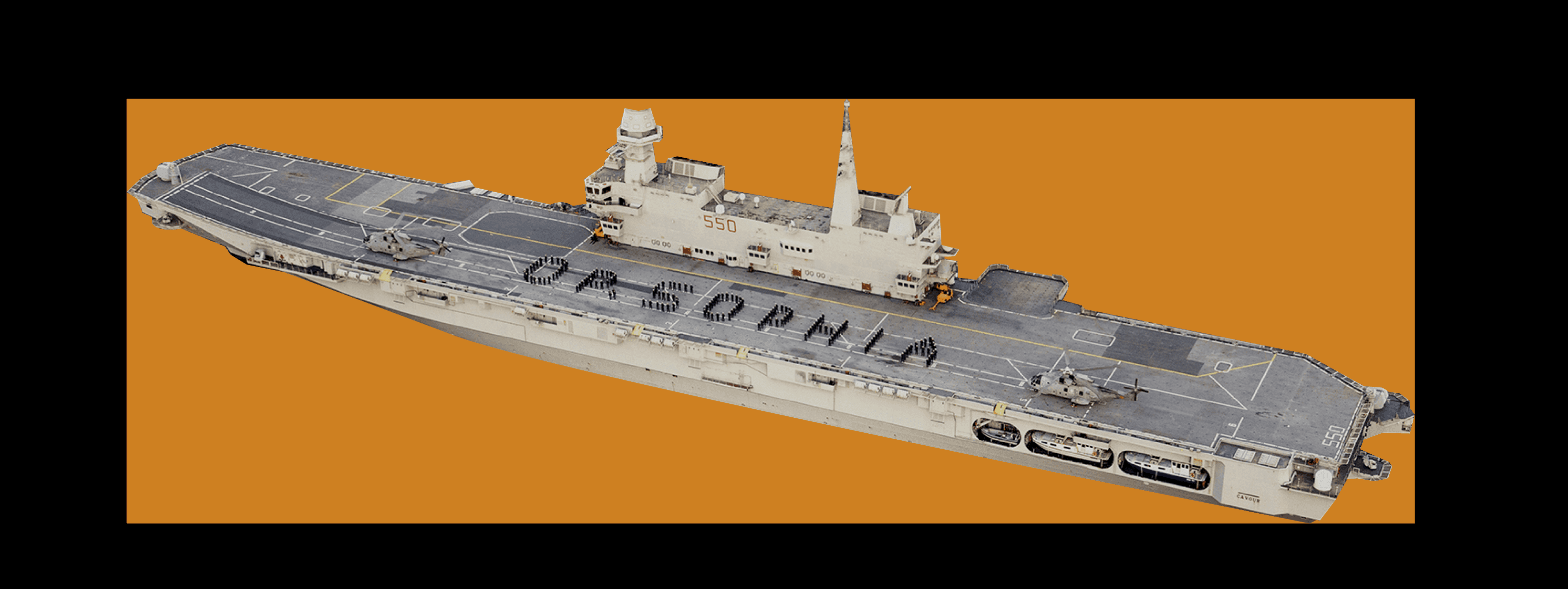
In 2019, Operation Sophia, the EU military mission in the Central Mediterranean that, despite many documented flaws36 did provide rescue to people in distress, was cancelled. In its place, the EU put drones.37 The Heron drones used are produced by an Israeli firm and were battle-tested in Israel’s 2009 attack on Gaza; the occupation of Palestine serves as a key testbed for border technologies globally.38
Instead of rescue, the drones would be a key node in the externalised Mediterranean system of violence, spotting people at sea and passing them on for so-called “rescue” by violent Libyan militias. Human Rights Watch noted the scale of this airborne complicity in abuse in 2022.39
This is one notable example of an expanding dragnet of global surveillance which Europe seeks to impose. The Invisible Borders project40 notes three purposes of surveillance machinery: for detection (e.g., spotting people crossing borders with infrared cameras), control (e.g., the technologies used to secure prison-like detention camps), and identification (e.g., tracking people through biometric data.)
Within Europe, these systems have advanced dramatically. Outside Europe, they are being imposed in ever more places. They are again framed as “aid” to struggling countries’ institutions. Morocco has also received video surveillance equipment and training on spyware. In 2025, with even the European Commission having suspended some of its Tunisia funding over allegations of violence, the UK stepped in to provide night vision systems to Tunisian forces.41
Non-EU Balkan countries have also received extensive “assistance" of this type. A 2023 report42 into biometric systems in the West Balkans reveals systems that blur immigration and criminal law purposes, lack anti-discrimination safeguards, and bypass key data protection principles. They also reveal another element of this system, not merely the provision of equipment to far-flung countries but the capturing of the data collected by Europe.
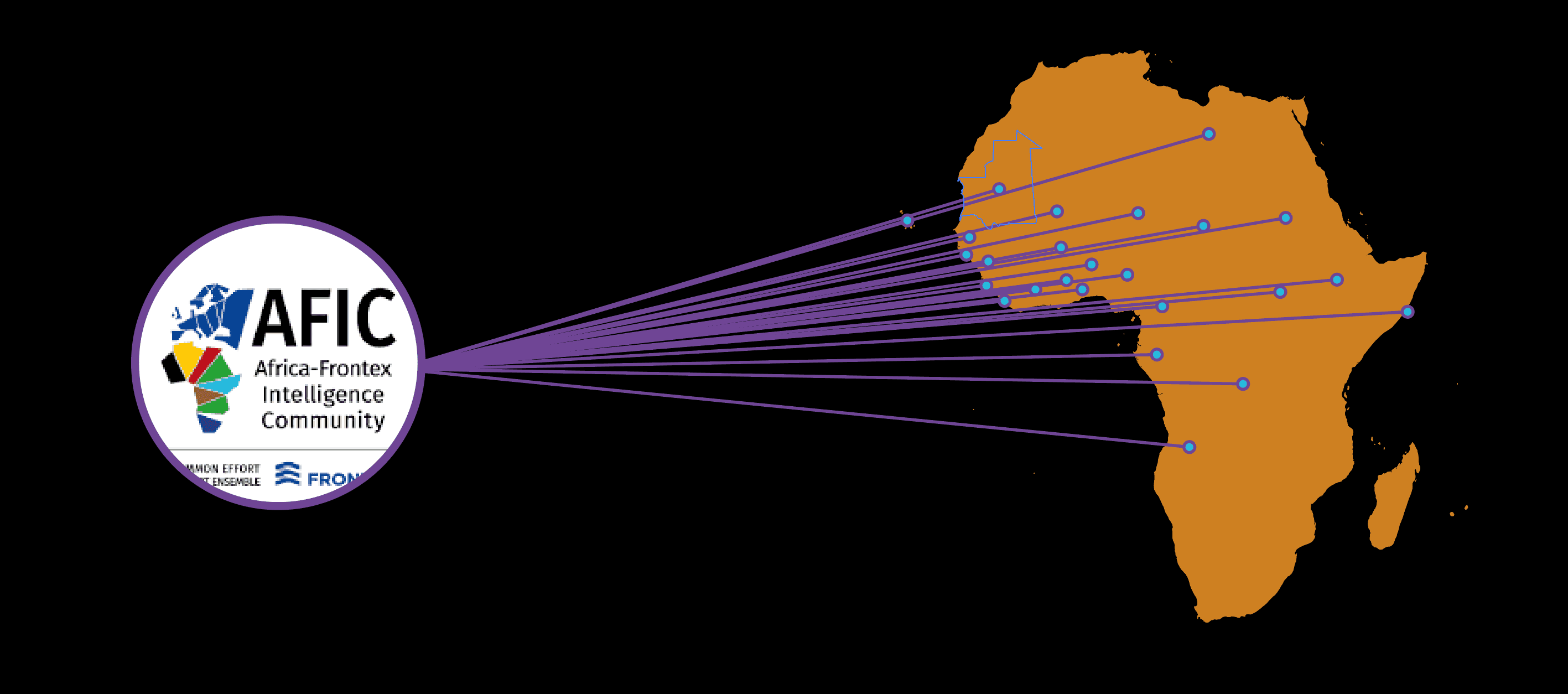
The Balkan database, like many others (the EU is trialling such approaches in countries as far from its borders as Nigeria)43 is accessible by EU authorities. Meanwhile, the forward deployment of EU officials through initiatives such as the “Africa Frontex Intelligence Community”44 involves EU officials directly in non-EU surveillance missions. This is, in turn, bleeding together with the EU’s security, policing and military missions across Africa.45
Even EU voter registration missions, billed as humanitarian support for strengthening democracy in African countries, have in fact captured data for EU migration management purposes. These incidents in turn highlight the private sector involvement in these processes; Gemalto, owned by arms and tech giant Thales, pushes both biometric voter registration and migration control systems across Africa.
EU border agency Frontex meets routinely with lobbyists from the military, border, and tech industries, providing an often opaque46 backdoor into European policymaking processes for industry. The role of firms at the heart of the US’ violent border regime in developing similar systems in Europe has been widely reported, alongside Europe’s own growing surveillance industry.47 Indeed, business lobby groups have lobbied hard for externalised migration policy long before the mid-2010s surge in arrivals.
When the EU’s AI Act attempted to regulate the dangerous use of new technologies, exemptions were carved out for “national security”, independent of already pre-existing exemptions for military use. European legislators had built a backdoor for the use of AI in forms they considered dangerous, for migration control.
As the US seeks deportation deals across Africa and the tech industry chafes at European regulatory infrastructure, the externalised surveillance machine is becoming a key vector for the capture of public policy and finances by militarised tech firms.
A Detention Camp Empire
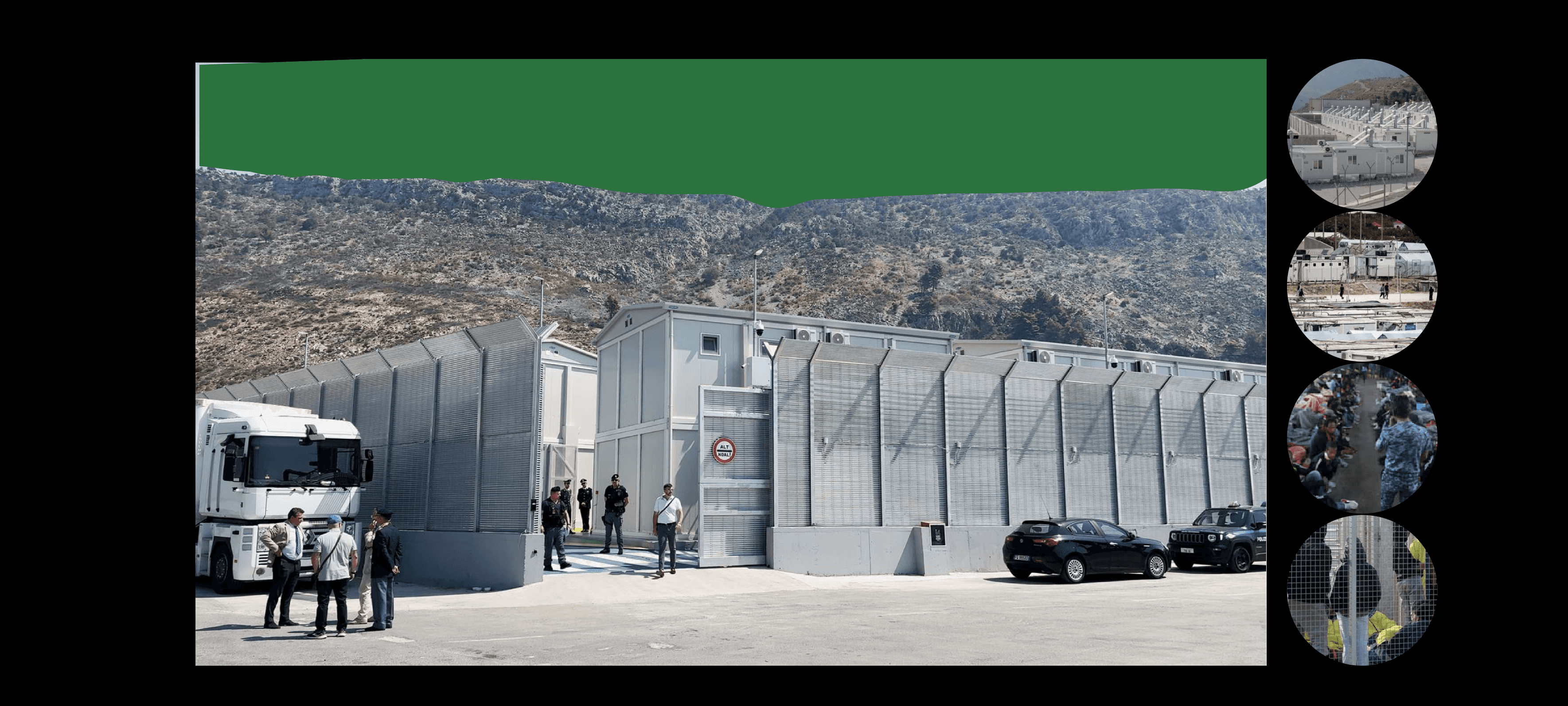
In 2022, Britain’s Conservative then-government announced its intention to deport undocumented people and asylum seekers to Rwanda for processing and resettlement. Unable to deport people to the dangerous countries they had fled due to the constraints of international law, they opted to investigate sending people to a third country instead.
The plan bore much in common with an earlier Australian scheme in Nauru which had become mired in horrors48, and indeed the UK government appointed one of the Nauru plan’s overseers as an “independent” monitor of the Rwanda policy.49 The plan was an operational disaster, with not a single person removed, and it was shut down in 2024 by the incoming Labour government. But within a year, the same government was mooting similar schemes in Albania.50
Britain’s woes did not deter architects of similar schemes in mainland Europe. In 2023, Italy and Albania signed an agreement51 for people rescued at sea by Italy to be detained in Albania prior to deportation, with expected costs to the Italian public of EUR1billion over five years. Two detention centers were established, supposed to hold thousands. It was seen as a wider template for using non-EU countries to handle EU asylum claims. As with Rwanda, the plan was an operational disaster52 which seemed mainly to exist to put Italian police officers up in five-star hotels.53 Italy eventually changed their purpose; they now act as temporary holding centres for people already slated for deportation by Italian courts.
“For the transferred people, there is a regime of extreme isolation, further obstacles to access to legal protection and a worsening of the already critical conditions of detention in the CPRs [repatriation detention centers].”
Legal organisation ASGI54
Another striking example comes from Ukraine, where the EU funded the construction of several migrant detention centers in Ukraine between 2005 and 2010. In 2015, Der Spiegel wrote of detainees describing being “beaten, tortured with electric shocks, forced to sleep on the floor and deprived of food.” Ukraine has had a working arrangement with Frontex since 2007 and a history of EU cooperation on borders that long predates Russia’s 2022 invasion.55
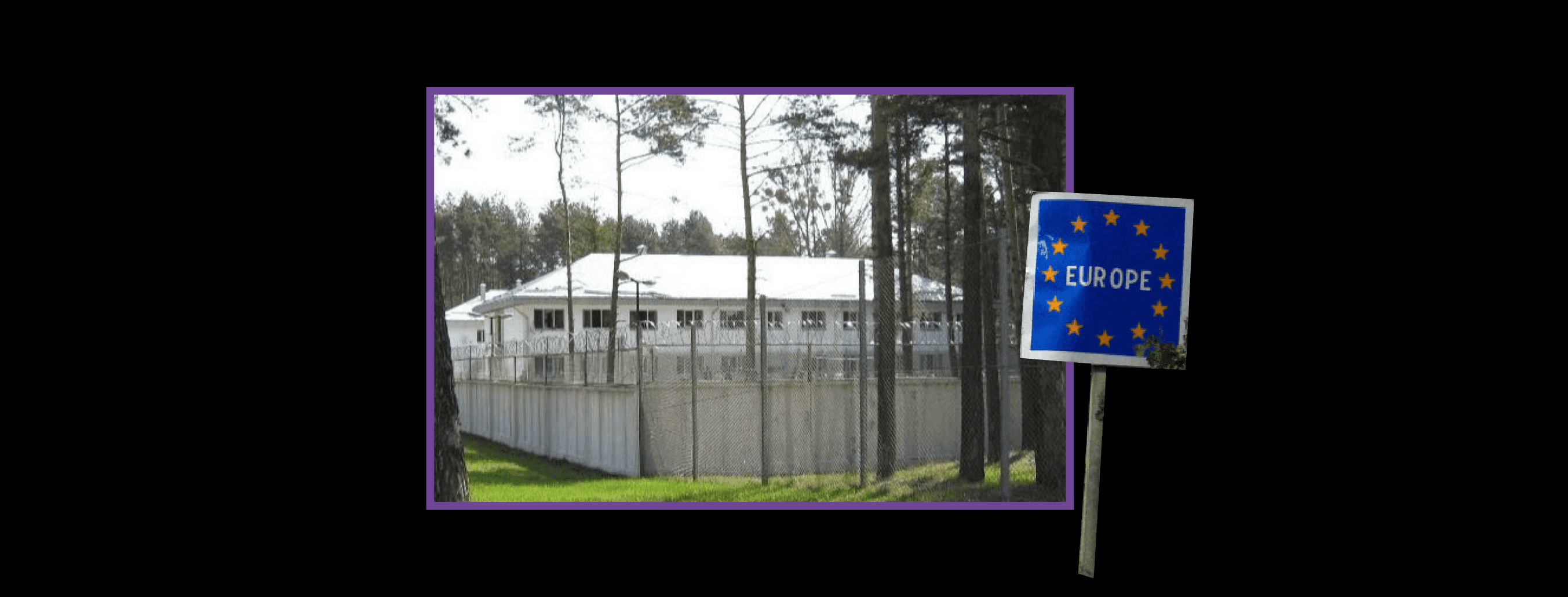
When the Russian invasion began, people migrating remained locked up in EU-funded detention centers, with fighting at the door.56 Meanwhile in January 2023, Frontex signed an agreement with Ukraine’s State Border Guard with a grant worth €12 million, as part of a plan for Ukraine to “potentially host Frontex joint operations in future.” (A similar situation occurred in Moldova, where following the invasion Frontex began an operation to 'support the reception of refugees from Ukraine', which quickly instead became about increasing externalised and militarised border control.
As with surveillance technology, there is a heavy private sector role here. Medihospes, the firm contracted to run the Italy-Albania centre, has faced scandals over overcrowding and people being mistreated in the Italian facilities it runs.57 Domestic detention camps, from Greece to the UK to the US, have been run by private providers58 at vastly inflated costs (these costs in turn inflame anxieties about the costs of immigration) whilst keeping people in miserable conditions - who, it bears repeating, are not accused of any criminal offence.
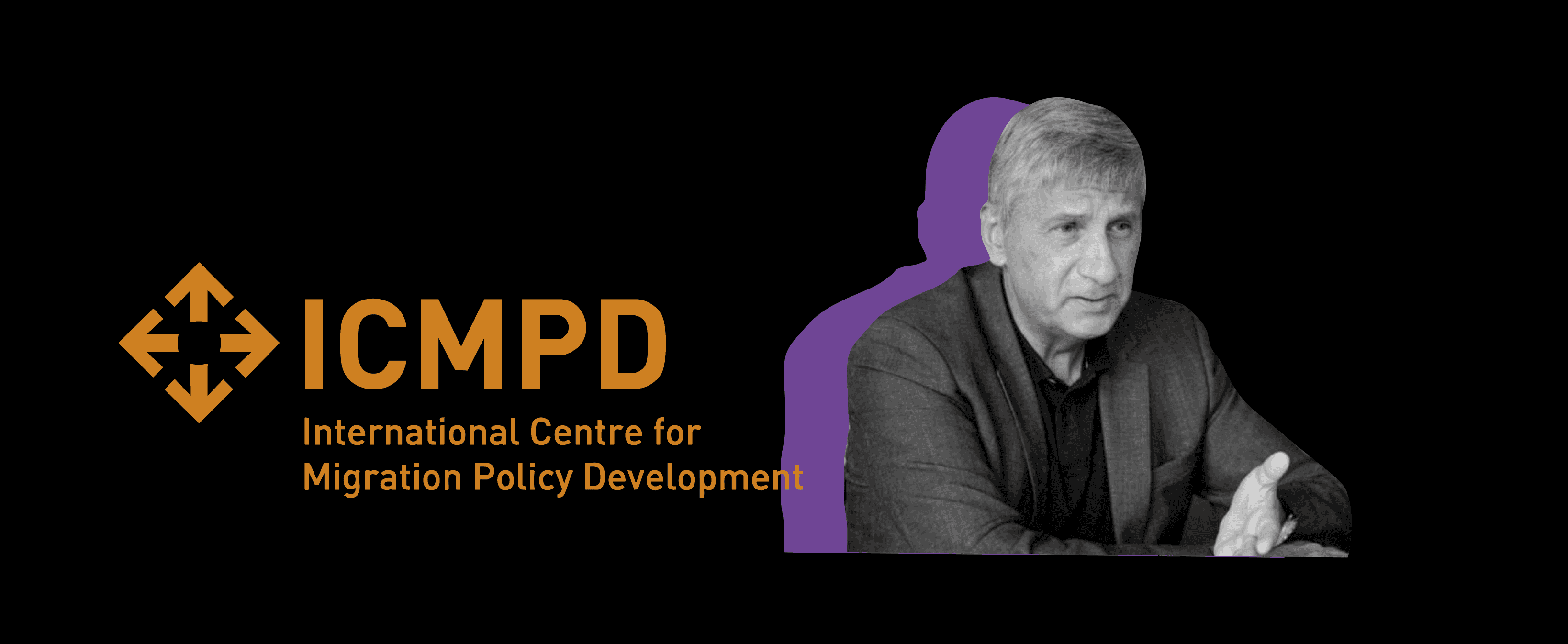
These firms are now seeking to internationalise their cash cow. Supporting them are a medley of trade bodies and think tanks. One notable example is the ICMPD, which presents itself as a neutral source of expertise but in fact has close links to the Austrian anti-migrant right and gains considerable income and prestige5960
Such policies were pushed for by private industry from the early 2000s. The wheels have been greased by think tanks - key to the construction of a concealed detention camp in Bosnia was the ICMPD, a think tank which purports to be a neutral advice source, chaired by so-called godfather of the Austrian radical right Michael Spindelegger. Among other things, this entity was known for managing an externalised camp in Bosnia where numerous abuse allegations exist.61
The exact level of private influence on EU policymaking is unknown. But in 2018, the European Commission insisted that deportation hubs in non-EU countries would be unlawful. Now it is enthusiastically driving through legislation62 to clear the barriers to more Rwandas and Italy-Albanias, despite little evidence of their effectiveness and plenty of their cruelty. Campaigners say the new EU Returns Regulation opens the way to a “European ICE.” Denmark, Germany, and the Netherlands were among the countries seeking such deals, whilst Europe’s far right, heavily funded and influenced by their US counterparts, expands its calls for “remigration” - their term for deportation as a form of ethnic cleansing.
The infrastructure required for EU offshore detention and deportation camps is huge - the facilities themselves as well as the transport, political, and administrative infrastructure required to sustain them. It will continue to transfer problems from wealthy countries better equipped to handle them to much poorer and more exploited economies. But it provides little benefit to European citizens struggling with living costs, who will see ever more public money transferred to this new network of for-profit prisons. The material from which profit is extracted is the forced movement of people seeking safety to countries where they have no connection or desire to go; therefore, some academics have described this process as a form of legalised human trafficking.
Conclusion
Many see the European Union’s pivot to border security as a response to the 2014-16 migration emergency, and see it as separate from the EU’s push for rearmament (understood as a response to the Russian invasion of Ukraine). The EU is often understood by both supporters and detractors as a bulwark against Trumpian policy.
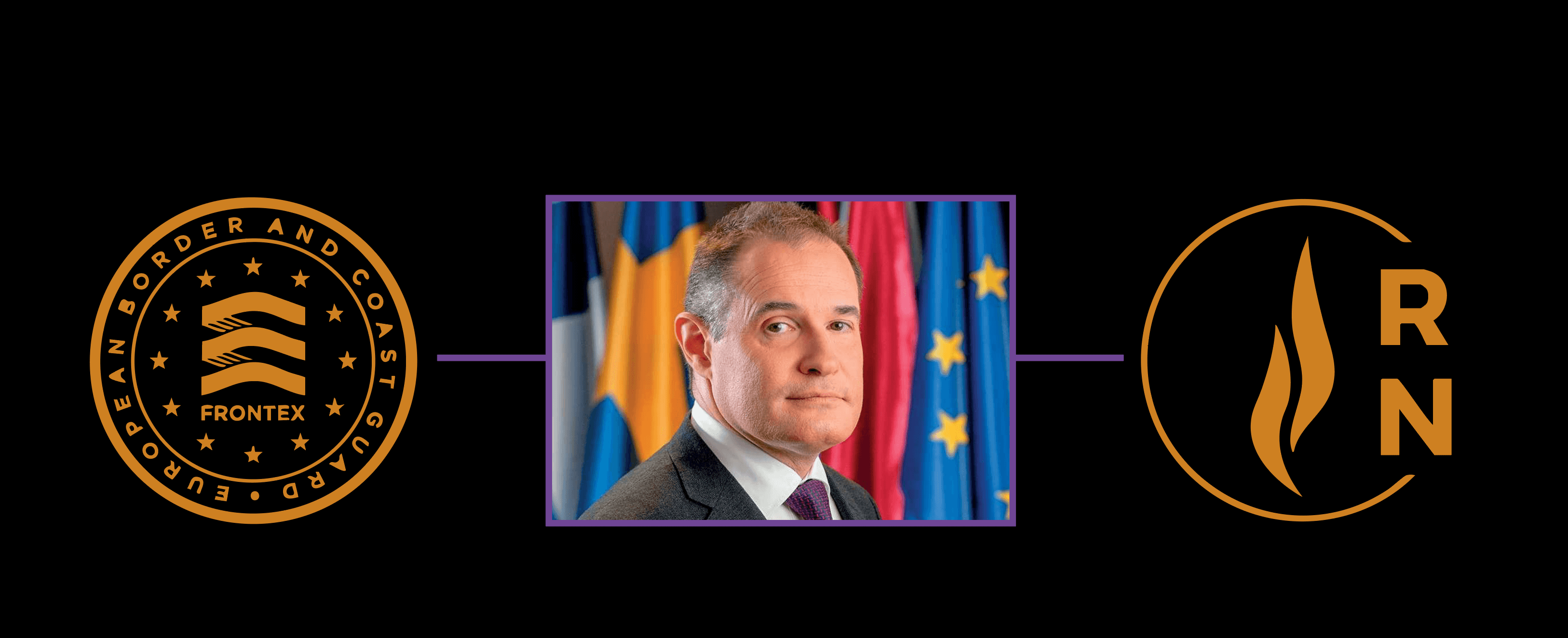
All of these assumptions break down when questioned. The EU has sought to push its Member States towards harder border securitisation since the early 2000s, with industry playing a key role. This has been heavily linked to EU militarisation, with Frontex’s Standing Corps becoming the first independent armed EU force, or “civilian troops wearing a uniform”, as its first director, Fabrice Leggeri, described it.63 (Leggeri was subsequently forced to resign over allegations of Frontex complicity in border violence in Greece, and later entered the European Parliament as an MEP for the French far-right party Rassemblement Nationale.)
Frontex is on course to become the EU’s largest agency, and has working arrangements with countries from Azerbaijan to the US.64 The agency is only the most visible element of a vast militarised and globalised public-private European border machine. It supposedly is there to prevent irregular migration, but there is little evidence of its longterm ability to do so - only to make routes more dangerous. More broadly, there is little evidence that “anti-migration” politicians are serious about reducing migration, so much as they are about using reduced rights, a hostile environment, and the threat of deportation to increase the exploitability of migrant labour.
In response to years of obsessive European migration politics - pushed by centrist as well as conservative politicians - some progressives have come to believe that the migration issue is a distraction, intended to divide people and scapegoat people migrating for economic ills that are in fact the consequences of a sclerotic, declining capitalism.
Hostile migration narratives may indeed serve this function. But they serve real material functions as well as political ones. One is, as discussed above, a significant transfer of public wealth to the tech, border, and military sector. Another is the increased normalisation of human rights violations and authoritarian politics, which quickly spills over from migrant to citizen. And a third is the congealing of elite networks across borders, inside and outside of Europe, through which violence takes the form of transactions conducted through a hierarchical, neocolonial geopolitics.
Attacks and criminalisation of European humanitarians demonstrating solidarity with people migrating is one example of such a drift. Another is demonstrated by the Italian far-right government’s anti-protest “security law”65, which announced a simultaneous clampdown on climate protesters and migration detainees. (Spyware procured in Israel was used against activists and journalists, including those in the migrant rights sector.)66 This drift also takes place in the countries where European externalisation projects are implemented, with attacks on migration going hand-in-hand with attacks on civil society, land defenders, and other protesters.
These are violent articulations of state and corporate power, but they represent systemic weakness as much as strength, as European states struggle to solve their internal crises by projecting their problems beyond their borders. As climate impacts grip the globe, as new cold wars fuel conflicts, and as an extractive economic model continues to produce poverty and social conflict, displacement is likely to increase - within Europe as much as outside it. This acceleration of the conditions that drive involuntary migration is clarifying the centrality of anti-migration hostility to the global reactionary project, as that project drives conditions that compel movement and then attempts to expand and profit from attacking those who move. Against this, the progressive project must defend people’s right to move - but not lose sight of their right to stay; to end the conditions that make a dangerous journey the only option for so many people.

