This report is an investigation by the Reactionary International and the Transnational Institute, and is accompanied by a series of essays on fascism as part of the State of Power report.
The New Authoritarian Wave
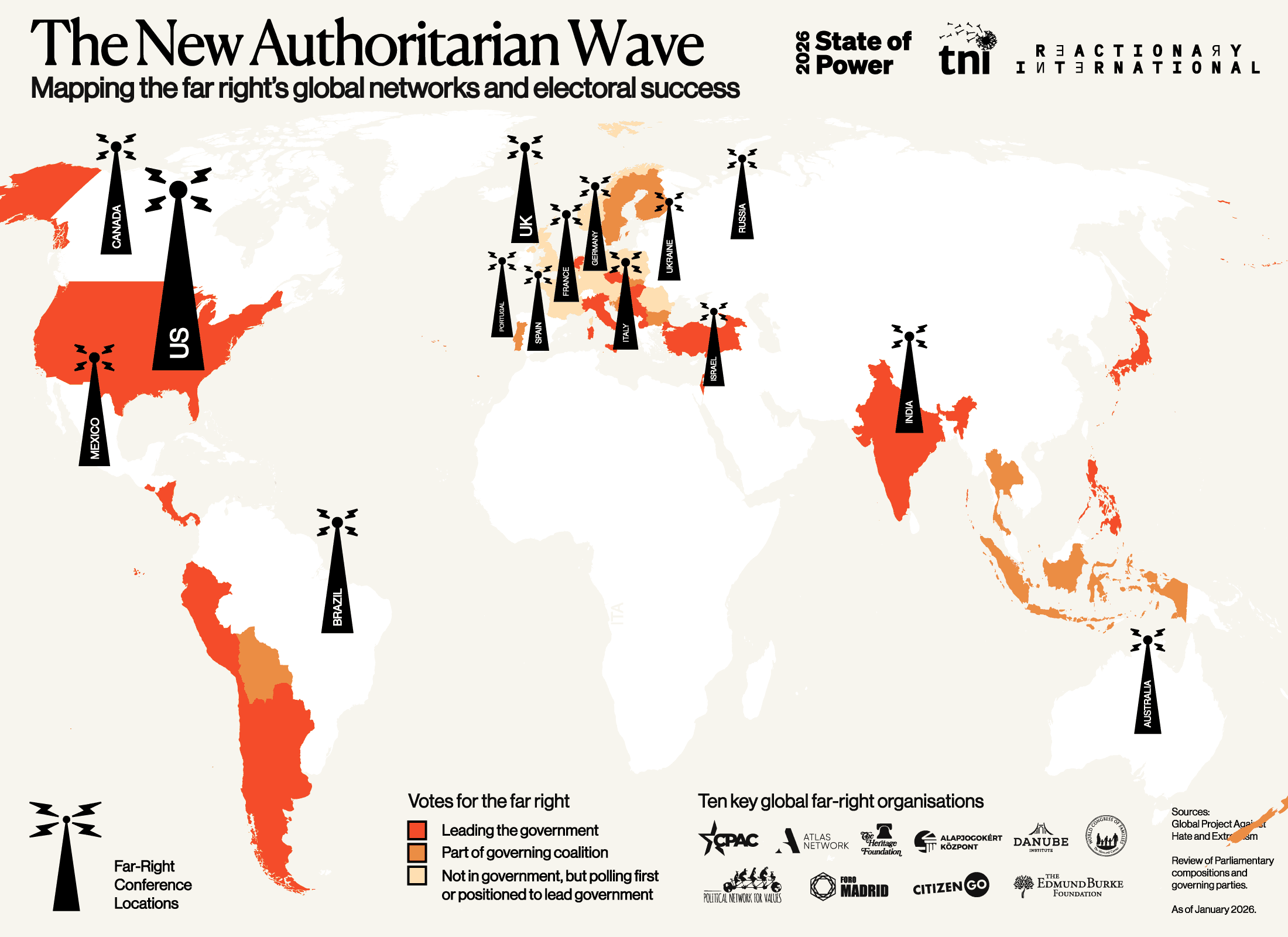
Far right and authoritarian forces have capitalised on global economic insecurity and political alienation to win elections. This map traces their electoral success, showing where far-right parties lead governments, shape ruling coalitions or are positioned to take power. It also tracks the main hubs and actors of transnational far right organising, represented here by the locations of transnational conferences and highlighting the key foundations and political networks that circulate funding, ideas and strategy. This has helped transform national movements into a coordinated global current.
A Perfect Storm
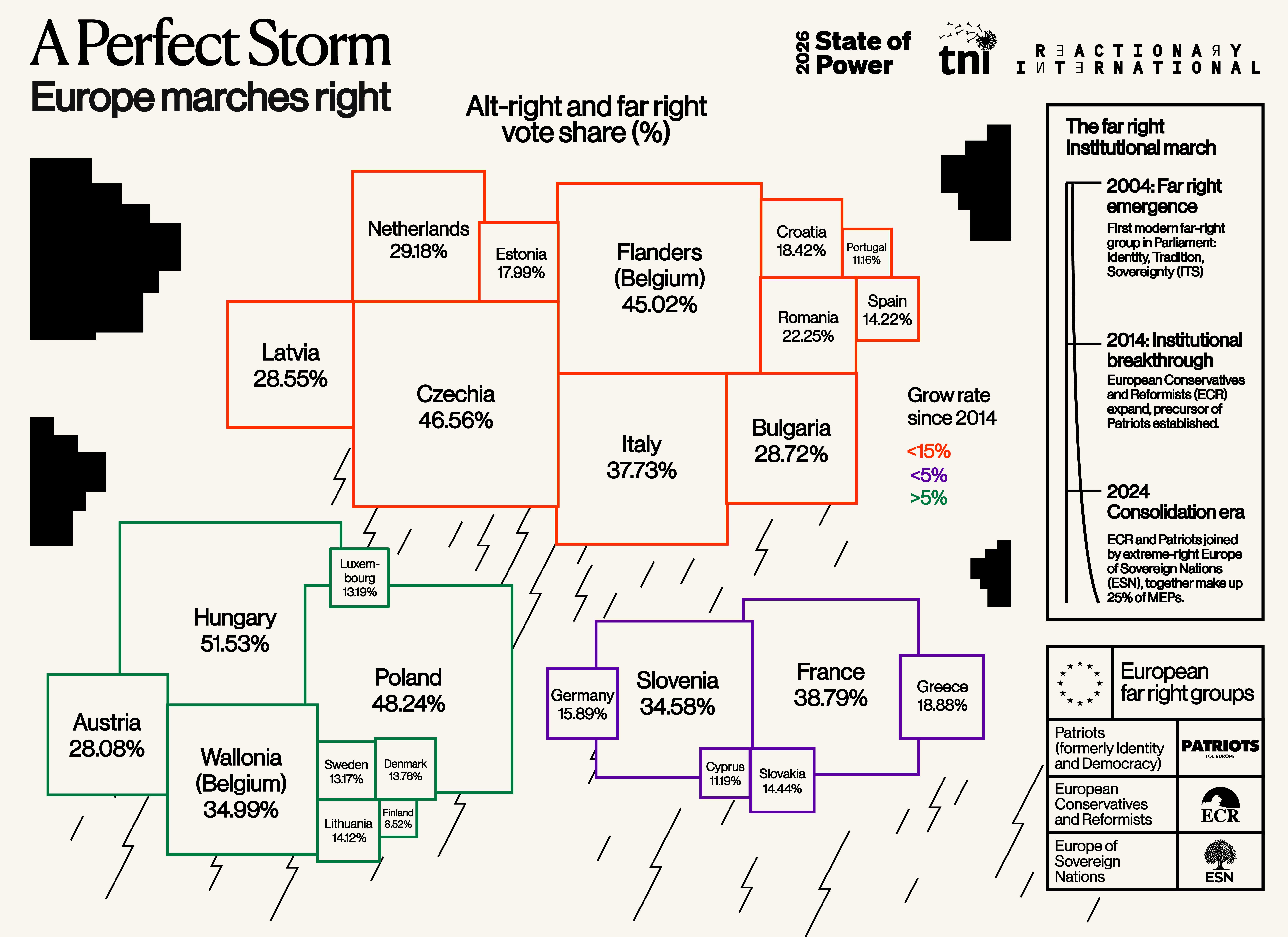
Electoral support for far-right and nationalist parties has grown across much of Europe over the past decade. In several countries, these parties now command large vote shares or hold governing power, while cooperation between parliamentary blocs has strengthened their influence at the European level. The trend reflects the failures of the European Union and its members to address the economic insecurity caused by the global economic crisis, the COVID pandemic, and the cost-of-living crisis.
Theocratic Wave
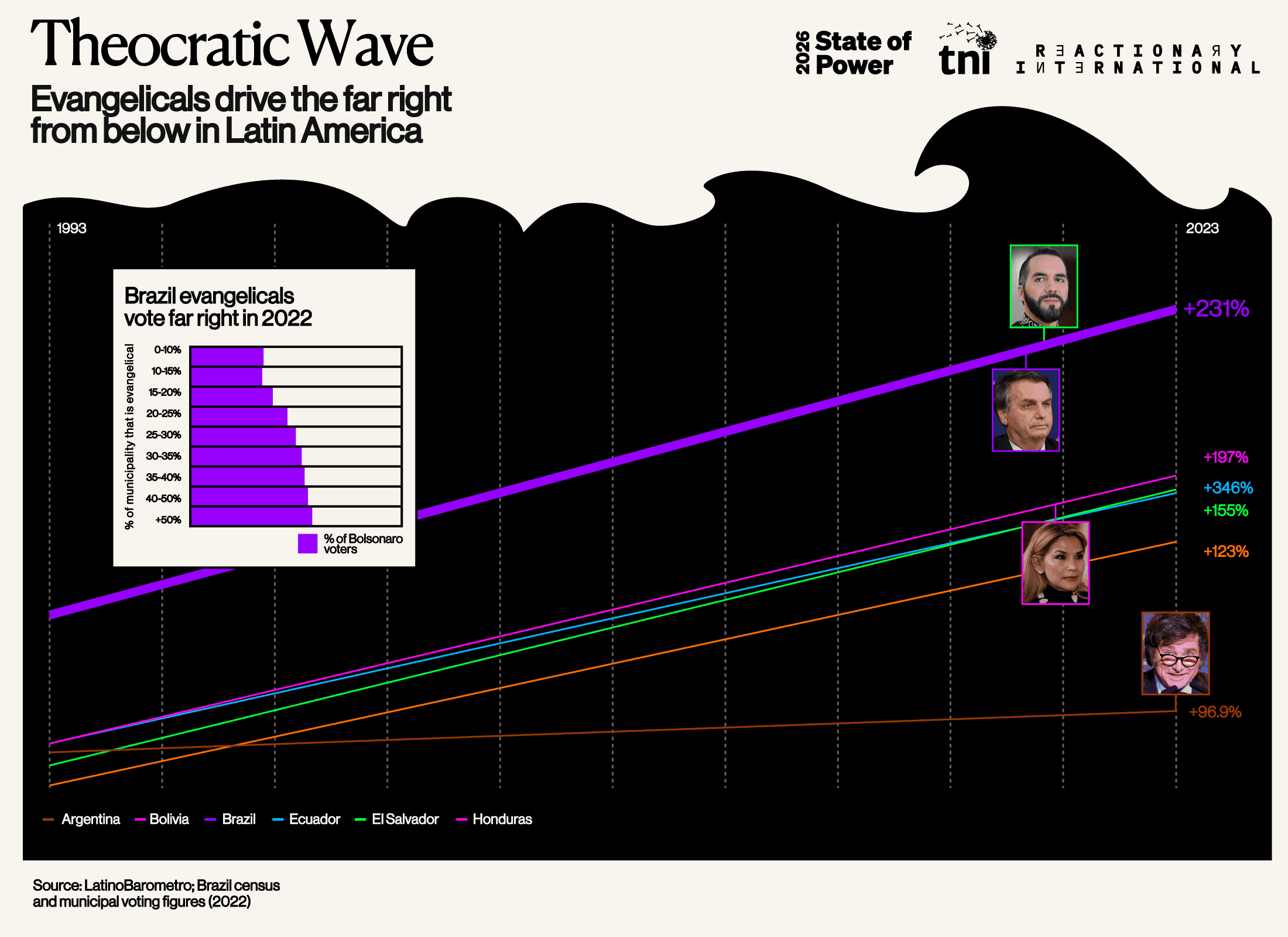
Religious movements, particularly evangelical and Pentecostal churches, have become significant political actors in parts of Latin America. Their expanding social influence has translated into electoral mobilisation, media presence and policy campaigns, often aligning with conservative and authoritarian agendas on gender and education.
Deal with the Devil

Israel, particularly under Netanyahu, has built political relationships with far-right parties and leaders internationally in pursuit of diplomatic backing, military cooperation and protection from accountability for its actions in Palestine. These alliances have included actors with records of antisemitism, historical revisionism or links to fascist traditions, from Europe to the Americas and Asia. Such partnerships reveal how Israel's geopolitical interests have supplanted its commitments to combating antisemitism globally. They have also helped legitimise far-right movements and normalised their participation in mainstream politics.
Big Tech and the Far Right
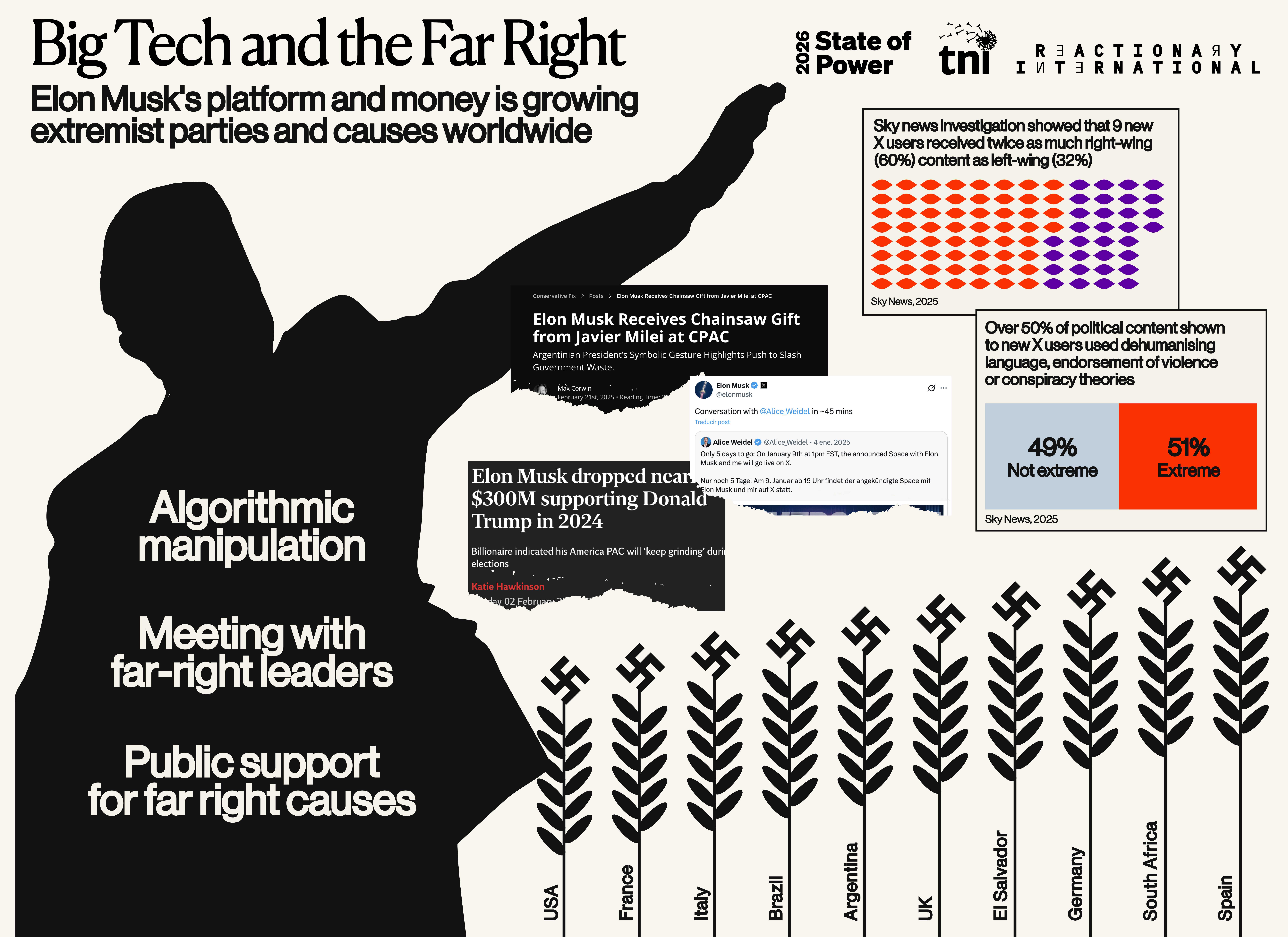
Elon Musk’s growing political role illustrates how concentrated private power in the tech sector is fuelling fascism. Through control of a major social media platform, amplification of far-right narratives and direct engagement with reactionary figures and movements, Musk has helped normalise extremist rhetoric and expand its reach. The case highlights how Big Tech is increasingly allying with the authoritarian right. This is a dangerous development as they are providing a communications platform that can amplify the far right's voices as well as supplying powerful coercive tools for surveillance and control.
Authoritarian Crackdown
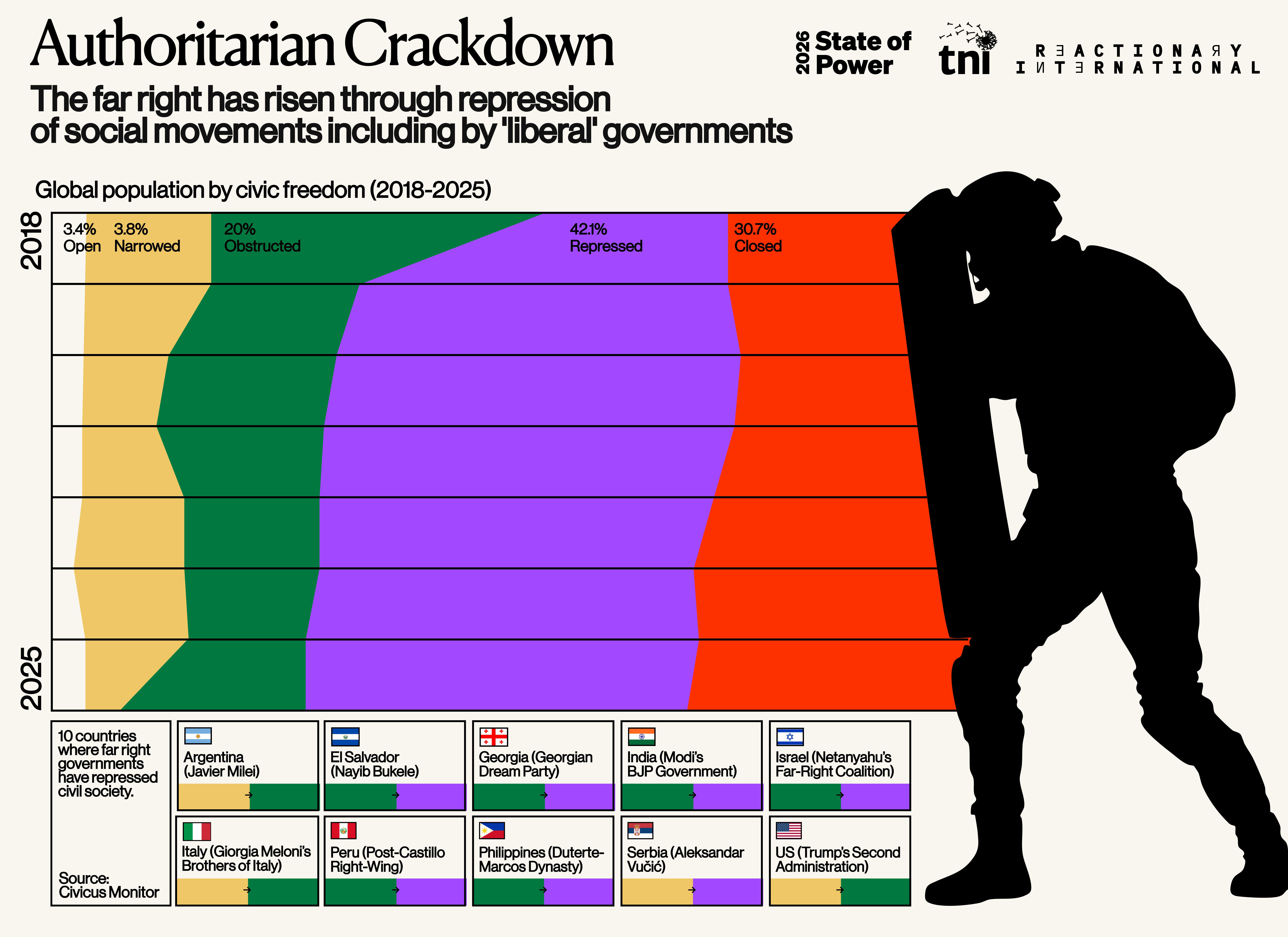
The rise of authoritarian and far-right governments has been facilitated by a growing repression of civil society, including by supposedly 'liberal' democratic governments. Once far-right parties come to power, the repression intensifies. Globally, protest movements, independent media, trade unions and human rights organisations have faced ever increasing surveillance, legal restrictions and criminalisation. A healthy democracy depends on an active civil society.
Funding Hate and Bigotry
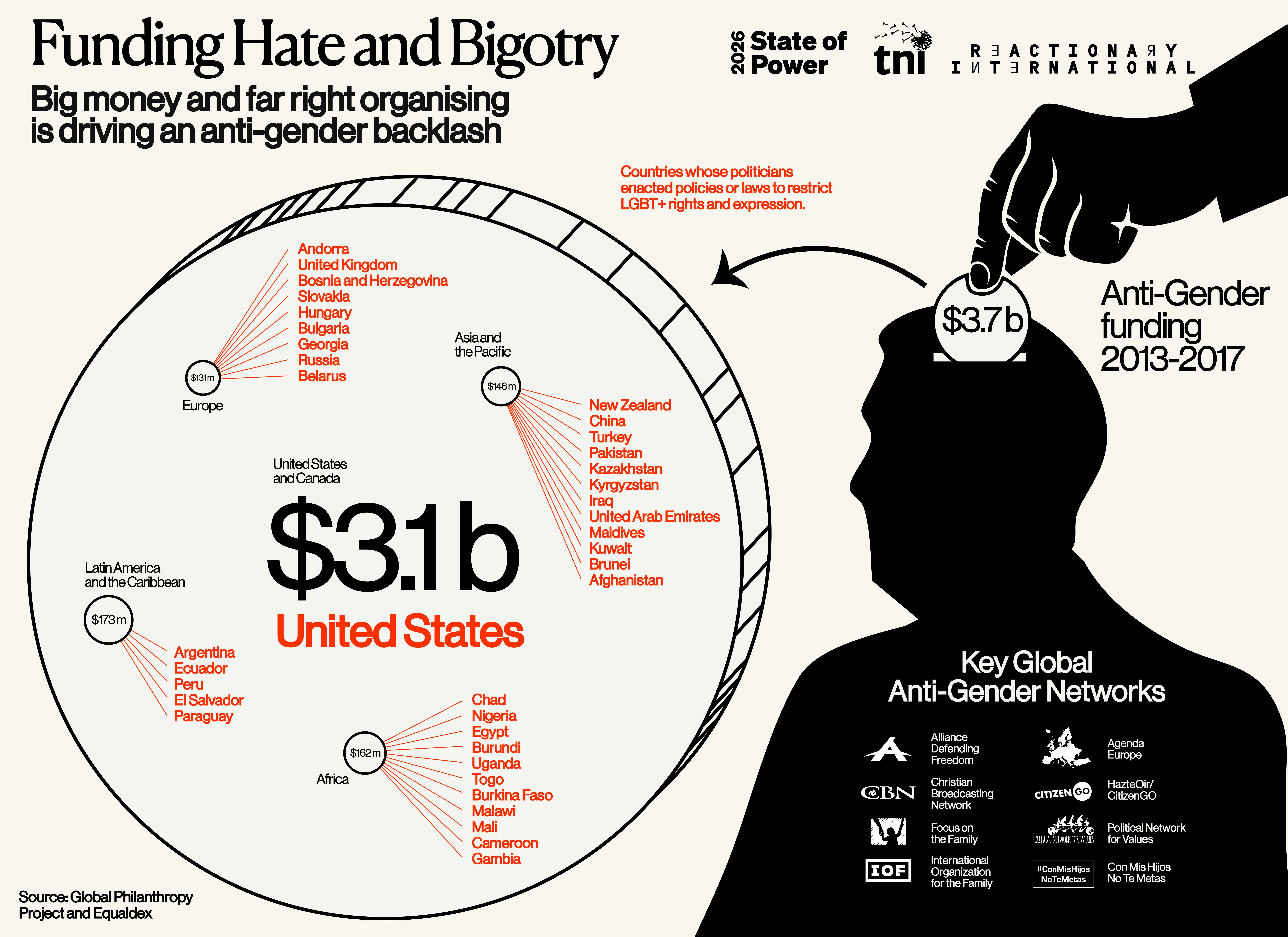
Well-funded transnational networks have channelled billions into campaigns opposing gender equality, LGBTQ+ rights and reproductive justice, weaponising these issues to secure support for broader far-right authoritarian agendas. Foundations, advocacy organisations and political groups coordinate across borders, financing media campaigns, litigation and lobbying designed to roll back rights and reshape public discourse.
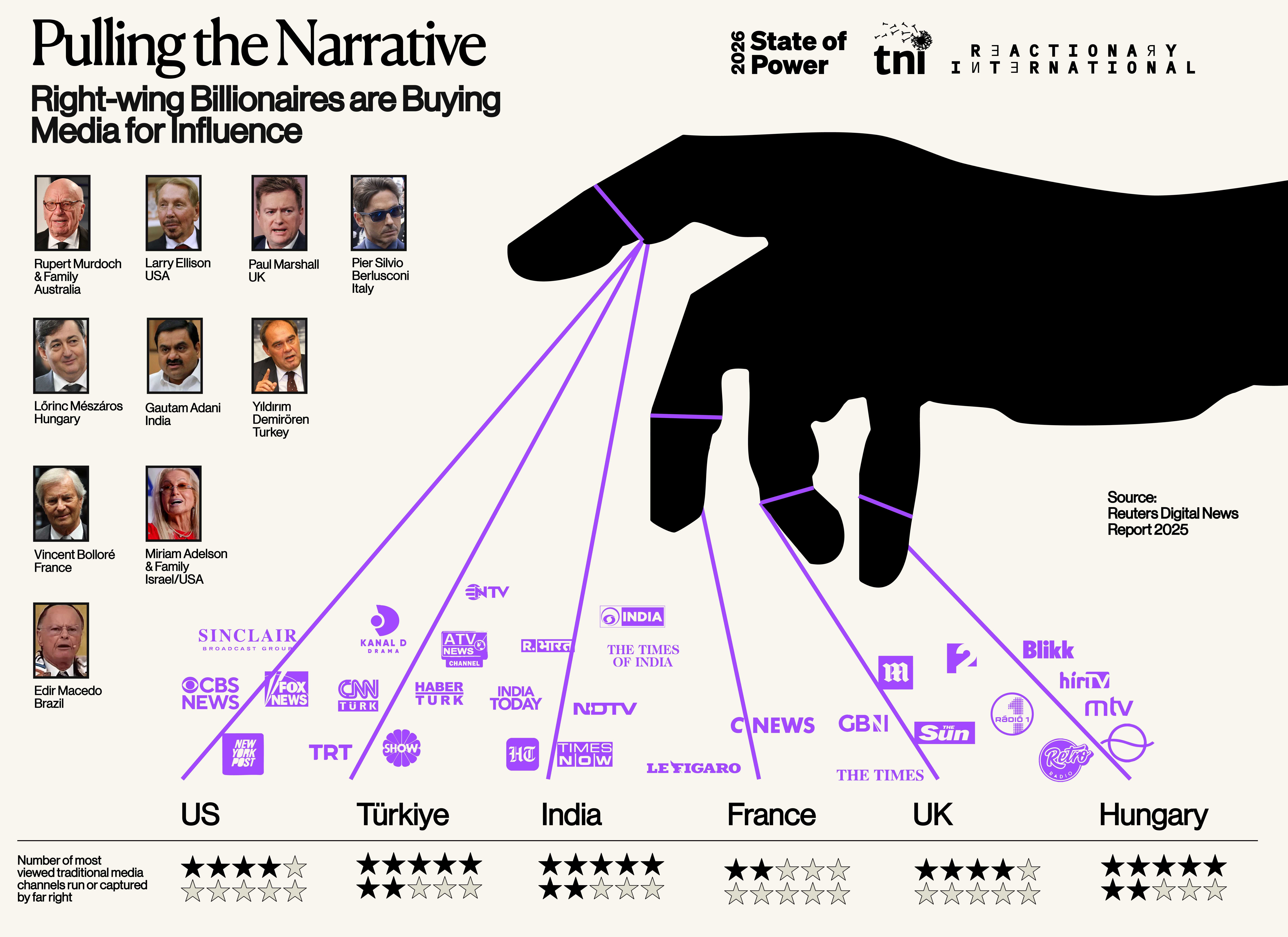
Pulling the Narrative
Control over media systems is a central pillar of political power as it shapes the public debate and constrains attempts to hold powerful elites to account. In numerous countries, wealthy individuals aligned with conservative and far-right politics have acquired newspapers, television networks and digital platforms. This concentration of ownership has marginalised dissenting voices, strengthened the reach of authoritarian and racist narratives, and amplified the voices of dangerous far-right leaders.
Spinning the Alt-Right Web
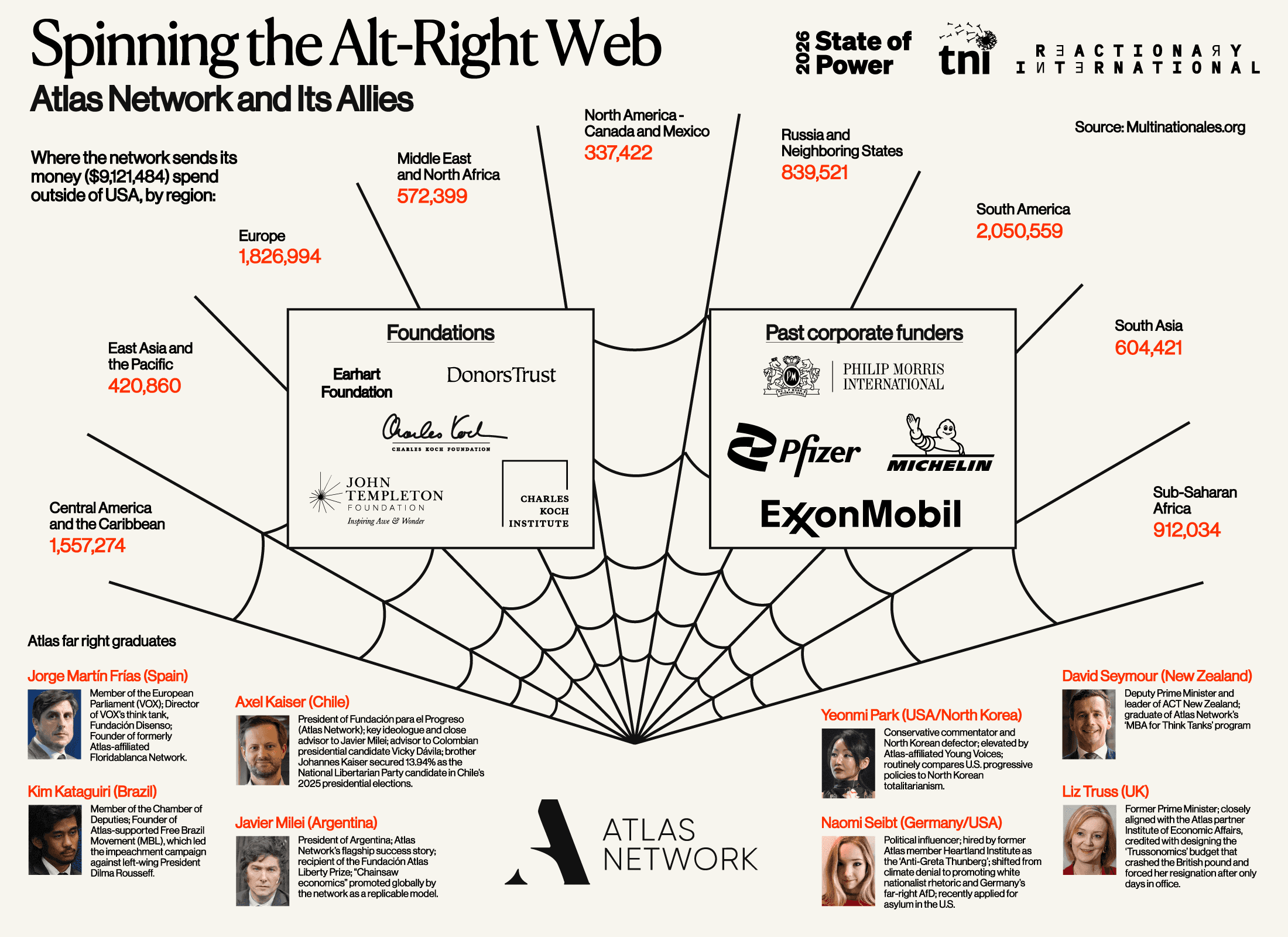
Think tanks, foundations and corporate donors form an extensive international infrastructure supporting free-market fundamentalism and nationalist politics. These networks train political leaders, shape policy agendas and coordinate messaging across continents, embedding far-right ideas within mainstream political and economic institutions and in the public debate. Atlas Network is one of the biggest networks of right-wing think tanks, and while it does not neatly map onto all the threads of the global far-right movement, it has been supported by and nurtured many of the far right's key organisations and figures.