


Introduction
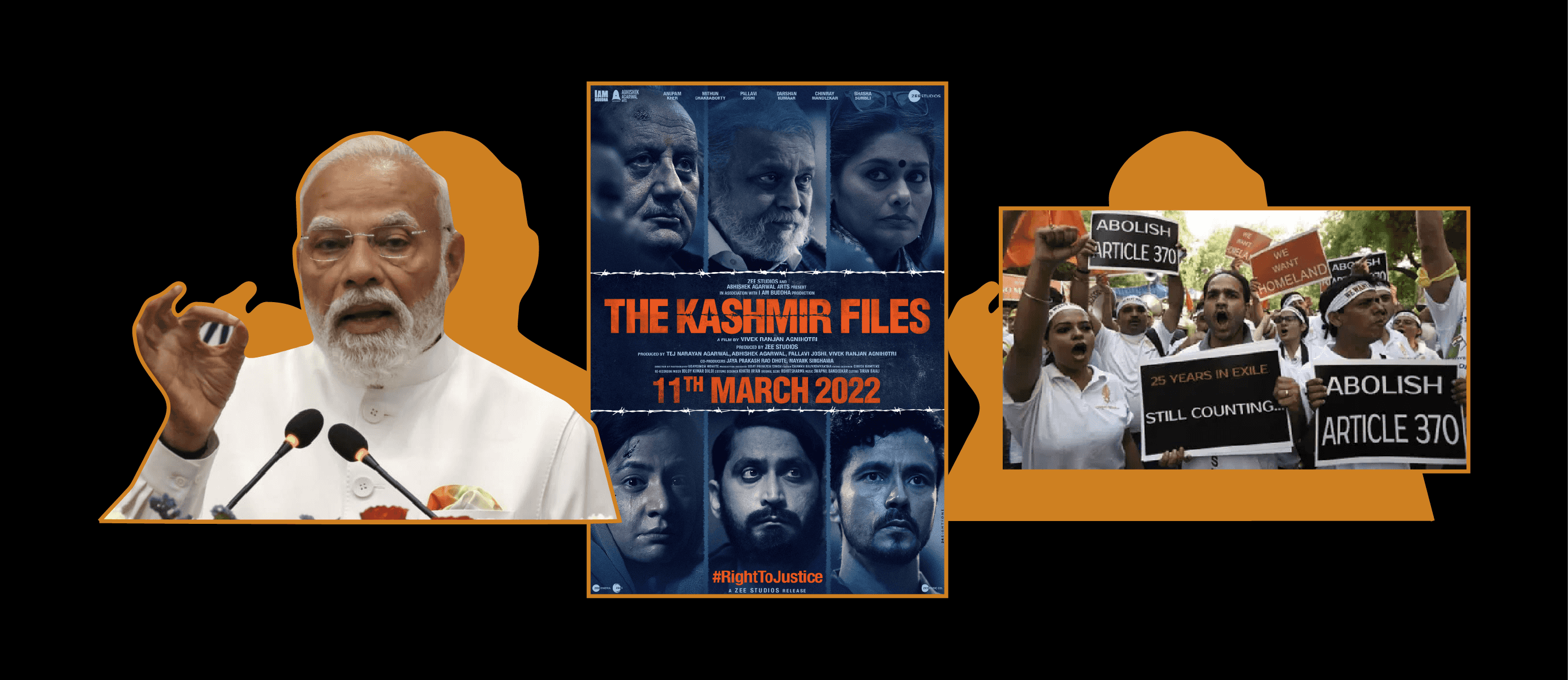
In March 2022, cinema-goers across India watched in tense silence as a young Hindu woman sobbed hysterically on screen, recounting graphic atrocities committed by her Muslim neighbours. Outside the theaters, emotions erupted into nationalist chants. Later, Indian Prime Minister Narendra Modi publicly praised the film as a courageous act of “truth-telling.” Several Indian states, ruled by the Bharatiya Janata Party (BJP), even declared it tax-free to make ticketing cheaper, and, in turn, boost viewership numbers 1.
The scene—from the Hindi-language film The Kashmir Files—portrays the exodus of Kashmiri Hindus in the early 1990s, an event deeply shaped by state repression. However, the film presents the violence through a lens where Muslims as a group appear complicit. Through factually bereft emotive storytelling and selective historical framing, the film served to amplify Hindu nationalist sentiments, preying upon already frayed communal ties, and rallying support both domestically and abroad. The Kashmir Files is one example of a strategic political tool that has been employed subtly and not-so subtly, in the almost 12 years since the BJP came to power 2.
Across the world, cinema has been deployed to bolster nationalism, justify violence, and erase resistance, both contemporaneously and over the 20th century. Ministries of ‘information’, state-run studios, military-funded films and cultural boards became the architects of narrative control — determining not just what people saw, but what they could imagine.
This report explores the global intersections of film, power, and propaganda — from Hollywood and the Pentagon, to Europe’s fascist past; from cinematic statecraft, and to the evolving fronts of media warfare playing out across India and Israel. By tracing the transnational flow of money and ideology through film, we reveal how cinema continues to operate as one of the most potent tools in the arsenal of ideological warfare.
How do films turn into state-sponsored propaganda?
Glorifying regimes and reshaping collective memory
European authoritarian regimes—from Nazi Germany to Franco’s Spain—perfected the use of film as a tool of ideological control. In the 1930s and 40s, fascist leaders viewed cinema as a strategic tool of mass persuasion. In fact, Adolf Hitler and Joseph Goebbels (the chief propagandist of the Nazi Party) placed cinema at the heart of Nazi cultural policy. Hitler wrote in detail about the psychological power of the image in Mein Kampf 3:
“The picture, in all its forms, including the film, has better prospects. In a much shorter time, at one stroke I might say, people will understand a pictorial presentation of something which would take them a long and laborious effort of reading to understand”.
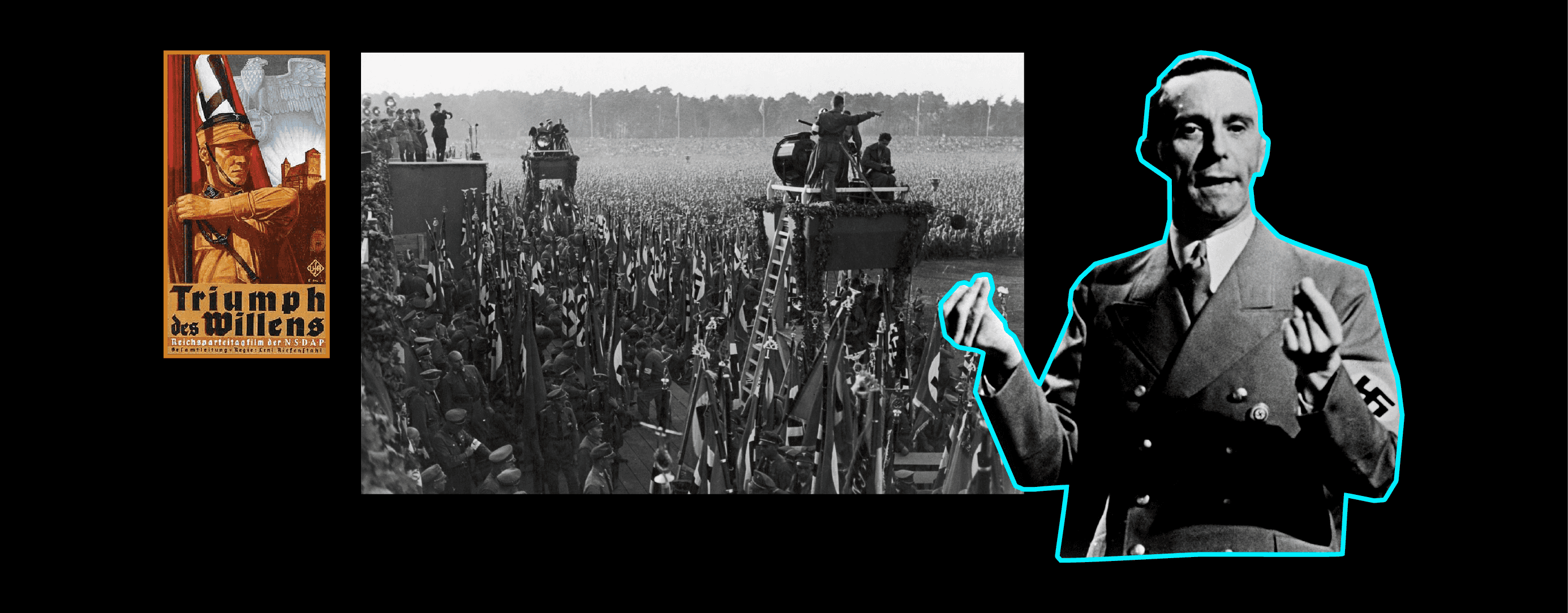
Goebbels declared that film should be “an instrument of cultural policy,” and with state backing, directors like Leni Riefenstahl were commissioned to produce glorified spectacles like Triumph of the Will (1935) 4, a cinematic monument to the 1934 Nuremberg Rally that visually deified Hitler 5. Even non-political genres were infused with Nazi ideology: romantic comedies and musicals subtly reinforced Aryan ideals, gender roles, and loyalty to the Reich 6. In this way, film across Europe was weaponized to manufacture national identity and promote mythology.
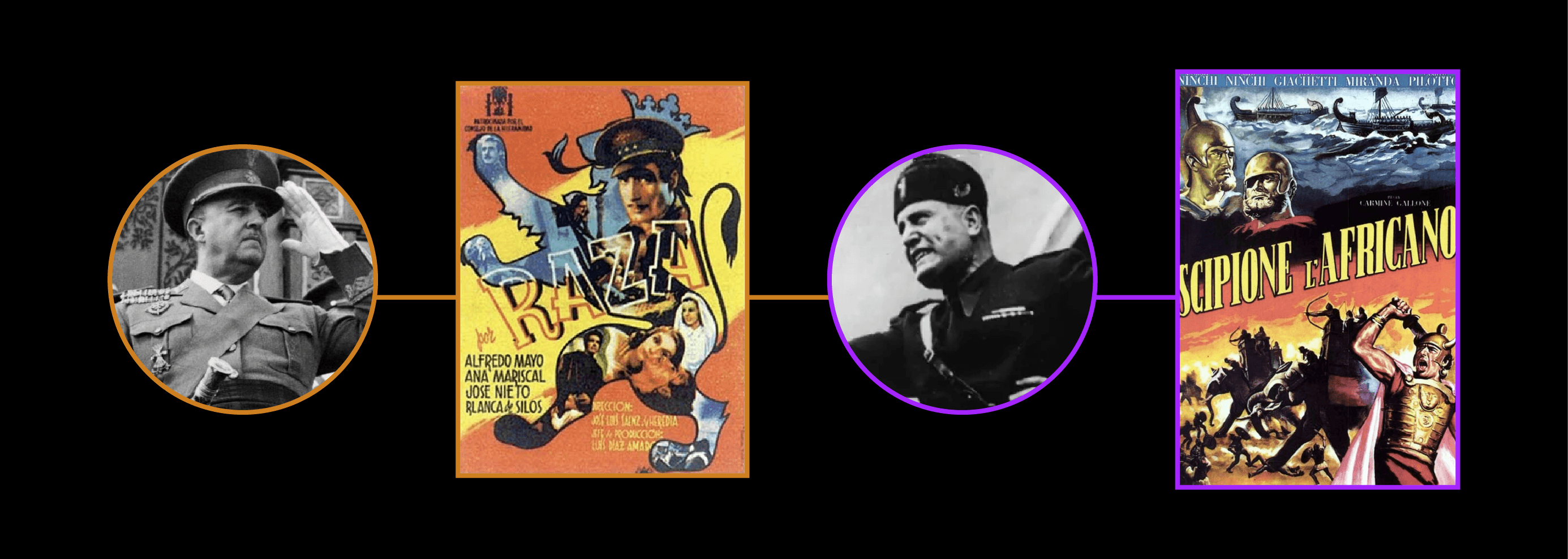
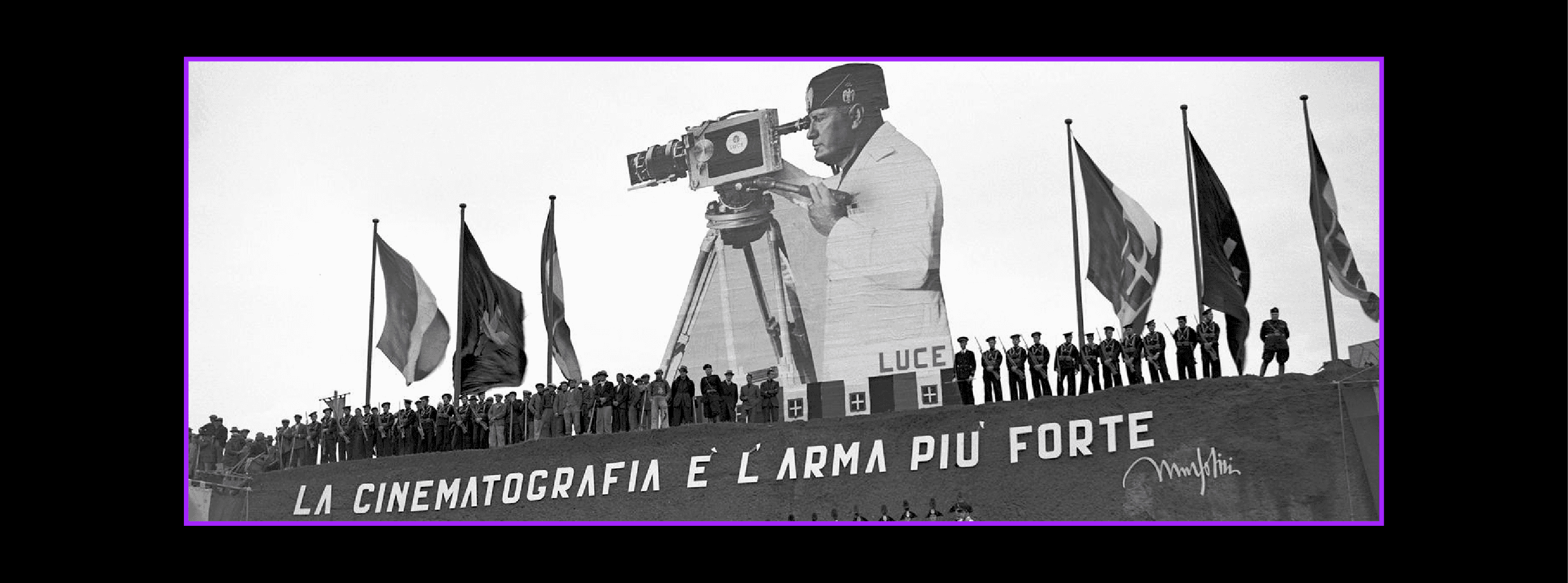
In fascist Italy, Benito Mussolini launched Italy’s film studio, Cinecittà Studios, in 1937, towards the production of films with Fascist messages. In fact, on the day of its opening, April 21st, Mussolini tried to play on the idea that it was the same day as the founding of ancient Rome 7. He also revitalised the Venice Film Festival to cultivate a national film industry that echoed Rome’s imperial past. Films such as Scipione l’Africano (1937) dramatized ancient Roman conquests, juxtaposing them with Mussolini’s African ambitions 8. Similarly, Spain’s Francisco Franco, under a pseudonym, wrote the screenplay for Raza (1942), a family epic that glorified military virtue, traditional values, and the regime’s divine mission. Raza became Spain’s foundational cinematic myth under Francoism 9.
Parallel to these overtly authoritarian projects, Europe's colonial powers developed cinematic traditions that sought to justify imperial domination. Films made during the 1930s–50s sought to defend the legitimacy of the empire under the guise of civilising missions. In Britain, Sanders of the River (1935) 10 depicted an English colonial administrator as a wise protector of African ‘tribes’. The film’s African-American lead, Paul Robeson, later disavowed his participation, calling the final product a betrayal of his values and a tool of colonial propaganda.
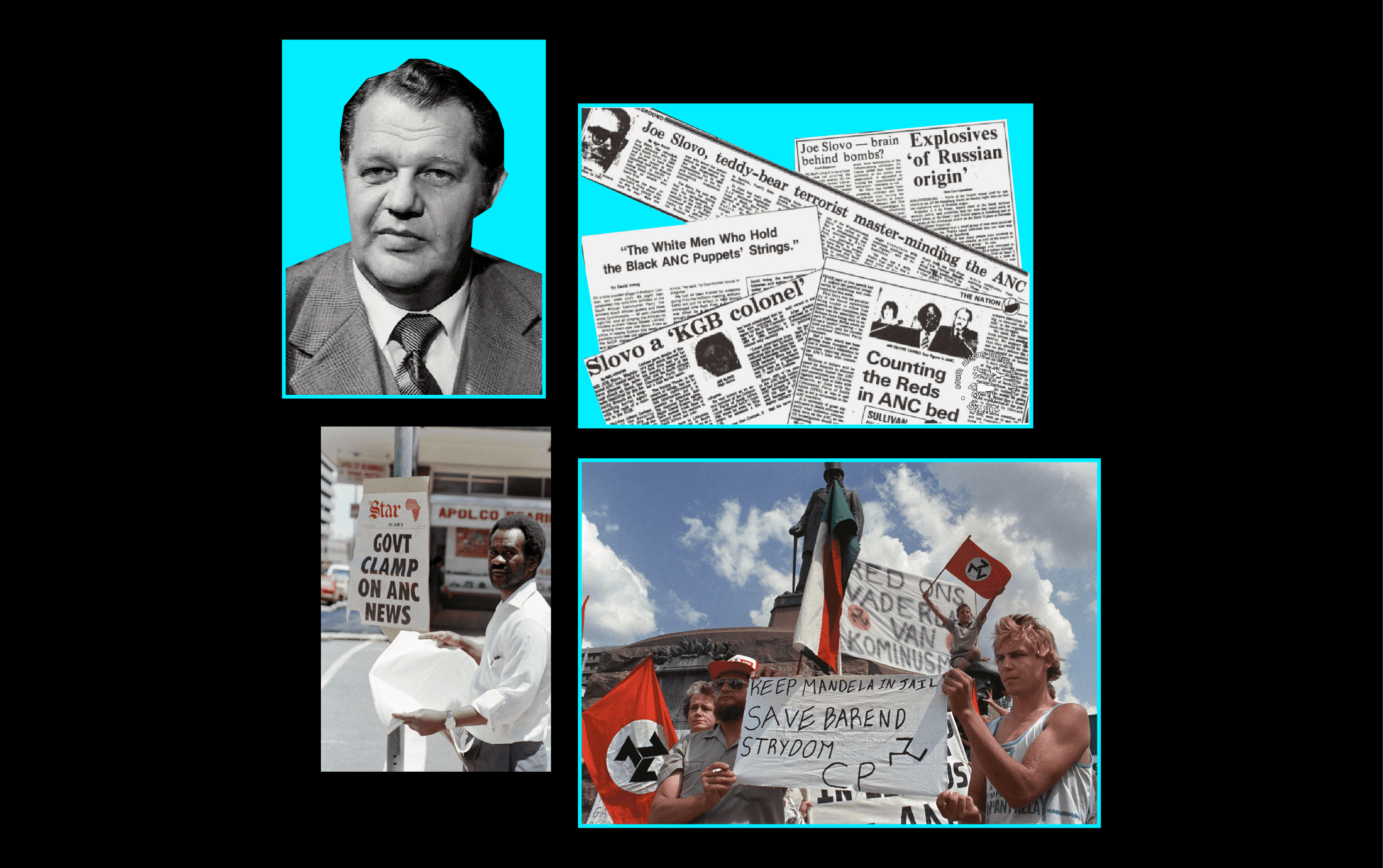
In apartheid South Africa (1948–1994), the government weaponised film to whitewash racial oppression. Through the South African Information Service, the regime flooded screens with idyllic travelogues and ‘educational’ films like These Are the South Africans (1950s), which peddled the myth of 'separate development' as harmonious coexistence. These productions meticulously erased the brutality of apartheid, presenting white rule as benevolent and inevitable, in line with the larger ideals of the ‘civilizing mission’.
In the 1970s the 'Muldergate' scandal exposed a covert global propaganda machine where millions were funnelled to pro-apartheid media abroad, including fabricated news outlets and film projects designed to sway foreign audiences 11. Also known as the Information Scandal, Muldergate Scandal involved the apartheid government’s secret misuse of the defence budget funds to manipulate public opinion, both domestically and internationally, through a series of strategic investments and acquisitions in publishing, media relations, amongst others.
At the centre of the scandal was Dr. Connie Mulder, a prominent government minister and leader of the National Party. Alongside Prime Minister John Vorster and intelligence officials, Mulder oversaw a covert propaganda campaign aimed at promoting apartheid. Millions of rand in state funds were secretly funnelled into pro-government newspapers, media projects, and even attempts to influence foreign governments. The goal was to counter growing global criticism of apartheid and bolster domestic support for the regime. Here, cinema served dual fronts—domestic indoctrination and international reputation laundering, revealing apartheid’s desperation to control the narrative as resistance grew.
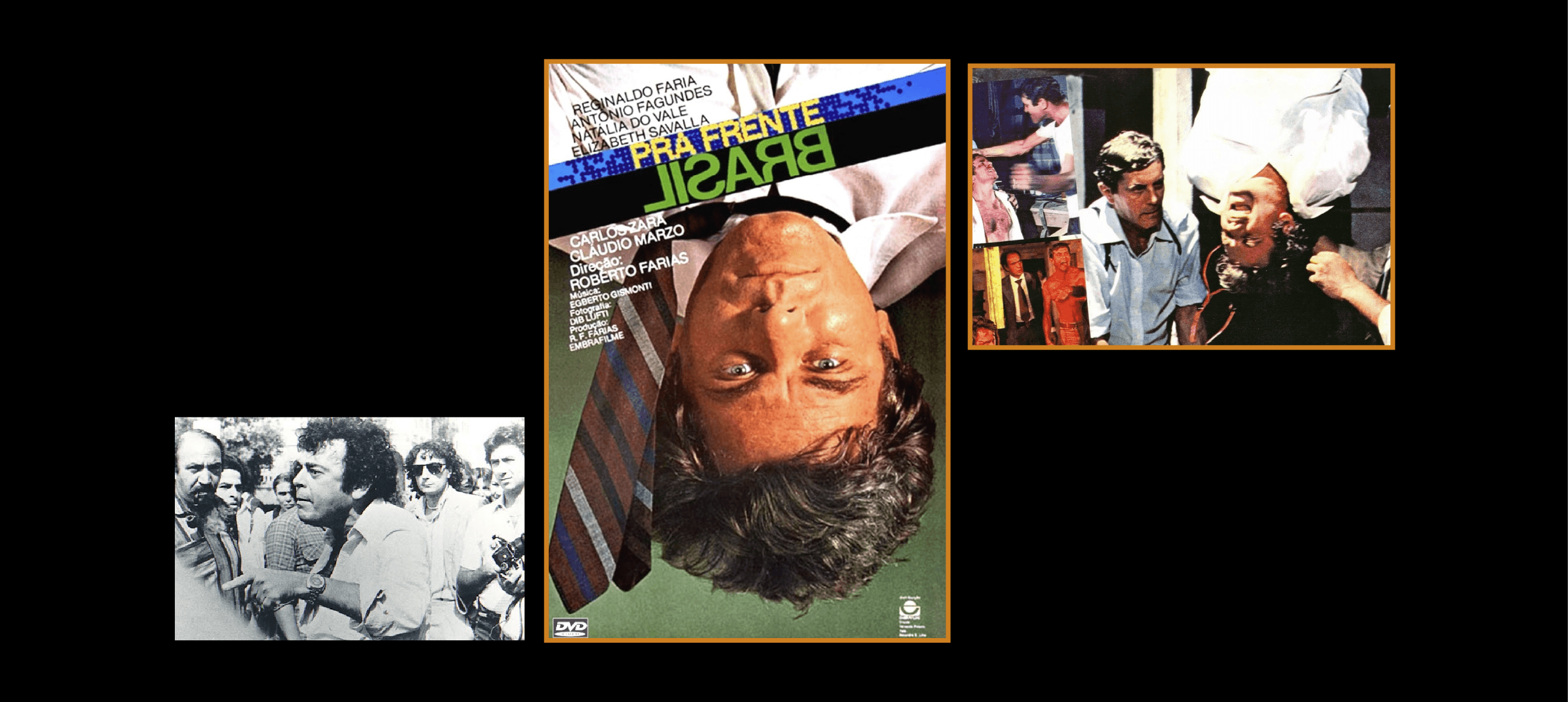
In the 21st century, Europe’s cinema has seen a new wave of nationalist revisionism, especially in countries where far-right politics have resurged. The 2004 German film Downfall sparked debate for “humanising” Adolf Hitler 12, prompting concerns about inadvertent sympathy generation. More recently, films like Styx (2018) and Undine (2020) have been criticised for their national allegories and perceived ambivalence on migration and identity.
In Hungary, Prime Minister Viktor Orbán’s government has launched a well-funded cinematic campaign to glorify national heroes and historic victories 13. Films like Arpad the Conqueror (2022), produced with government grants, depict Magyar conquests — late 9th-10th century invasions and migrations by the Hungarians into Central Europe, leading to the founding of the Kingdom of Hungary — as divine destiny, while reinforcing a civilizational narrative against migrants. In another example, Hungary’s Those Who Remained (2019) 14, an Oscar-nominated film, tells the story of Holocaust survivors, but subtly reframes Hungary as a victim, glossing over Hungarian complicity during WWII.
Europe’s ideological influence on cinema today is more diffused than during the fascist era, but it is no less potent. What binds these diverse national cases - from Riefenstahl to Orbán, from the 1930s to contemporary times - is the use of cinema to shape collective memory: whether through imperial nostalgia, fascist myth-making, or historical revisionism.
Censorship & suppression: silencing dissent
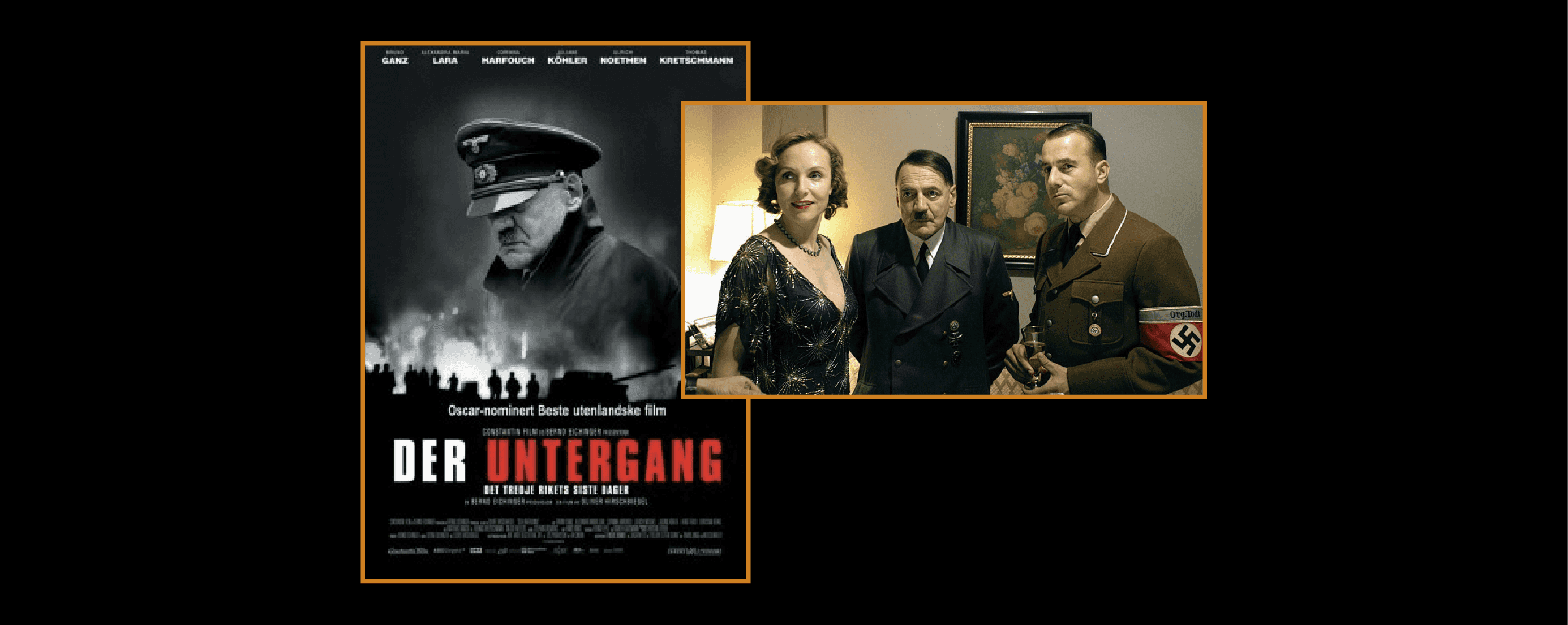
The film can function, not merely as propaganda, but also as a tool for collectivizing memory by the powers that be. In Indonesia, the Suharto regime 15 mandated nationwide screenings of Pengkhianatan G30S/PKI, a state-produced film depicting the 1965 communist coup attempt as a barbaric betrayal, thereby legitimising the regime’s violent anti-leftist purges. Broadcast annually as compulsory viewing until Suharto’s ouster in 1998, it reinforced the dictatorship’s official narrative through repetition and institutional enforcement.
Latin American authoritarian projects, on the other hand, did not operate in isolation; they were often indirectly bolstered by U.S. Cold War interventions – a larger continuation of foreign policy set in stone since the Monroe Doctrine (1823) 16. The CIA and the US State Department, as part of their broader anti-communist campaigns, actively supported cultural initiatives aimed at countering leftist influence, thereby entangling Latin American cinema in a wider geopolitical struggle 17.
In the 1980s, Reagan’s administration ran an Office of Public Diplomacy that, among other things, provided briefing materials and possibly footage to producers to encourage anti-communist storylines (for instance, in 1980s action films featuring Cuban or Soviet antagonists in Central America) 18 . These were indirect methods (unlike the blunt bans and propaganda of local regimes), but contributed to a media atmosphere supportive of right-wing, anti-communist positions.
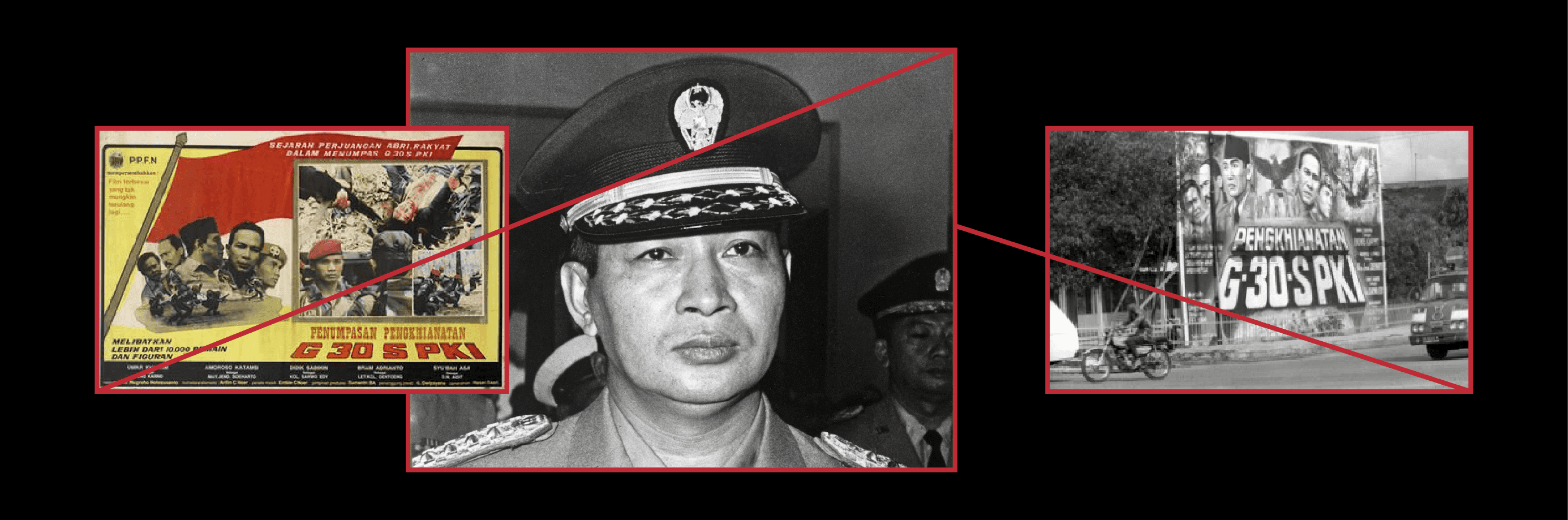
Censorship was another tool widely employed by the State. Brazil’s 1964–85 military government heavily censored the provocative Cinema Novo movement 19. Filmmakers who critiqued the regime or societal injustice, like Glauber Rocha, faced exile or suppression. Brazil’s resistance film Pra frente, Brasil (1982), which depicted torture during the junta, was censored, and the filmmakers were persecuted. Its suppression maintained the regime’s desired narrative (that there were no abuses) until after the dictatorship. Meanwhile, the Brazilian state’s film agency ‘Embrafilme’ subtly encouraged projects that were nationalistic and non-subversive.
In Argentina, the junta (1976–83) banned films that referred to the “disappeared” or human rights abuses. Instead, they quietly supported movies that glorified Argentine traditions or the military. One infamous propaganda piece was La Patagonia Rebelde (1974), which depicted a 1920s labor uprising being crushed (which the anti-communist regime at the time approved of).
In Chile, Augusto Pinochet’s dictatorship took a different approach: rather than investing in elaborate cinematic propaganda, the regime prioritized the suppression of dissenting voices 20 while producing sparse but strategic newsreels that reframed the 1973 coup as a necessary salvation from Marxist tyranny. Decades later, the release of Pinochet (2012), a documentary sympathetic to the former dictator, reignited public outrage 21 and film as a battleground for historical interpretation.
Hollywood’s military-entertainment complex and right-wing funding
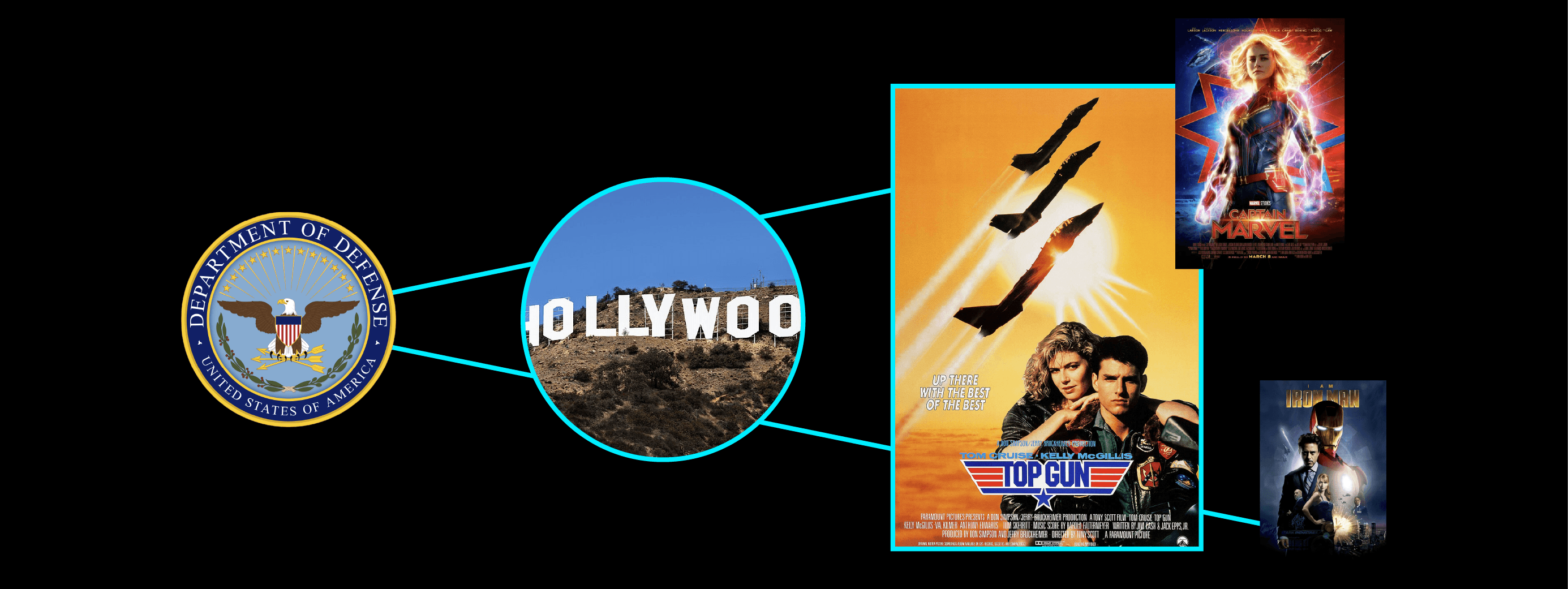
In the United States, Hollywood has long maintained a symbiotic relationship with the national security apparatus - a collaboration often described as the “military-entertainment complex 22.” The U.S. government does not own or operate studios, but exerts influence through military liaisons, technical support, script vetting, and indirect incentives. This setup has enabled American films to double as vessels for pro-military messaging, advancing narratives that align with the Pentagon’s interests.
Since World War II, the U.S. Department of Defence (DoD) has maintained formal liaison offices in Los Angeles to assist filmmakers seeking access to military bases, hardware, and personnel. In return, the Pentagon requires final script approval to ensure “accurate and positive” portrayals of the armed forces 23. This influence is both light-touch and sweeping, ranging from altering lines of dialogue, to reshaping major plot points.
For instance, the producers of Top Gun (1986) accepted extensive Navy input in exchange for access to F-14 Tomcats and an aircraft carrier. Scenes portraying military personnel negatively were removed, and the final product celebrated the Navy as a glamorous, elite force. Navy recruitment surged by 500% in the film’s release year 24. Top Gun: Maverick (2022) followed a similar pattern, with the Pentagon again providing modern jets, aircraft carriers, and script review 25.
This practice extends beyond war films. The Marvel Cinematic Universe (MCU), for instance, has worked closely with the Pentagon and the FBI. Iron Man (2008) received Air Force support in exchange for script alterations. A scene in which an F-22 mistakenly fires at Iron Man was removed, as was a joke about military suicide 26. Subsequent films like Captain Marvel (2019), which featured Air Force pilots and branding, were directly used in recruitment campaigns aimed at women 27. Even in WandaVision (2021), the closing credits include a “special thanks” to the DoD. These edits, while subtle, collectively portray U.S. military and intelligence agencies as virtuous, effective, indispensable, while reinforcing both the ‘savior-of-the-world’ narrative, with the ‘center-of-the-world’ narrative – vital tools in the arsenal of the US as a soft power.
The FBI has also shaped Hollywood narratives. During the Red Scare, J. Edgar Hoover’s FBI blacklisted leftist writers and forced script changes in films such as Moon Pilot (1962), where a foolish FBI agent was rewritten as a generic “security officer 28.” Documents released via the Freedom of Information Act show the FBI continued reviewing film and TV scripts into the 2010s, granting or withholding use of its name and seal depending on portrayal 29.
Similarly, the CIA has been involved in Hollywood productions involving espionage. Zero Dark Thirty (2012), which dramatised the manhunt for Osama bin Laden, was made with extensive CIA and DoD briefings. Critics argue the film sanitises the agency’s use of torture, thereby legitimising controversial counterterrorism tactics 30.
The Cold War marked a high point for overt propaganda. The CIA covertly funded films like Animal Farm (1954) and 1984 (1956) — where the storylines were altered to show how coups can overthrow communist regimes — while the USIA (United States Information Agency) distributed American values-themed documentaries across the Global South 31. Although these films were not mainstream theatrical releases, they were crucial in projecting U.S. soft power abroad. Hollywood’s patriotic instinct became entrenched: filmmakers eager for DoD cooperation often internalised the messaging requirements, even without direct interference.
Frustrated by what they perceive as liberal dominance in Hollywood, conservative billionaires and activists started funding their films and documentaries to push nationalist or ultra-patriotic messages. In the 21st century this relationship has become more overt, even as it has grown more complex. Hollywood now receives private funding channelled through offshore vehicles, with investors increasingly seeking to steer films away from what they describe as “liberal narratives” that challenge the cultural authority of the military and the nation-state.
In 2023, Dan Snyder, a billionaire donor and Donald Trump ally, secretly funded, through a shell-production company, a biographical film about Trump’s early years. Although Snyder had assumed that it would be a hagiography of his friend, the finished film portrayed Trump critically 32.

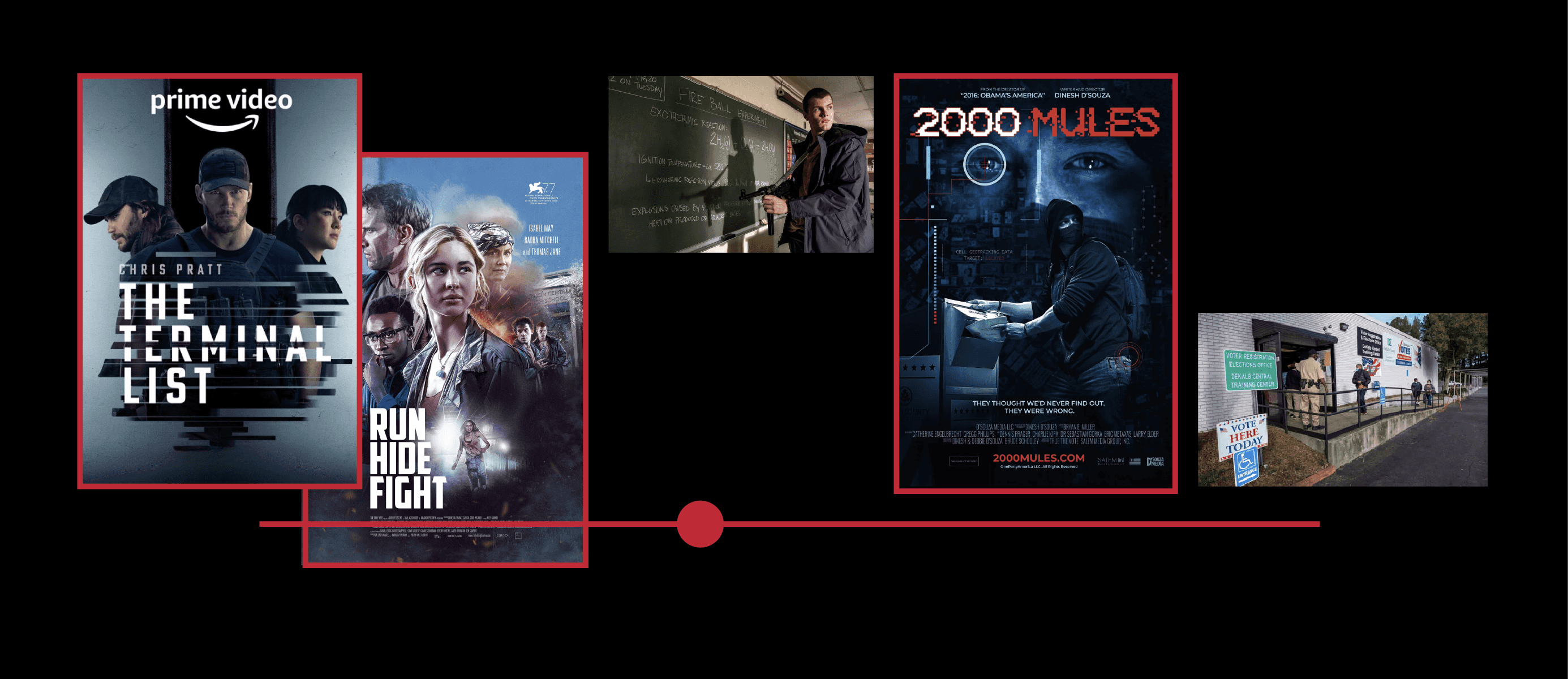
More transparently, outlets like The Daily Wire, backed by right-wing donors, have created an alternative production ecosystem. Their 2023 action film Run Hide Fight, about a high school shooting, promotes armed self-defense and critiques liberal gun control policies. Likewise, political commentator Dinesh D’Souza’s pseudo-documentary 2000 Mules (2022) alleged, without credible evidence, that Democrats committed large-scale voter fraud in the 2020 election. The film was distributed via right-wing media nonprofits and reached millions despite widespread debunking 33.
What’s notable is the migration of such content to major platforms. Amazon briefly hosted 2000 Mules for rental; Run Hide Fight premiered at Venice before being picked up by DailyWire+. This suggests that ideologically driven cinema - once confined to fringe channels - can now penetrate mainstream cultural circuits.
Far from being shaped by organic cultural trends alone, American cinema today is actively curated by a convergence of state and private conservative forces. Scholars argue this has created a “censorship-by-cooperation” model: filmmakers self-censor in exchange for institutional support, while ideologues use funding to build parallel systems.
While the collaboration between Hollywood and the Pentagon never disappeared, what’s new is the scale and openness of these ideological alliances. Recent films like The Terminal List (2022), an Amazon Prime series starring Chris Pratt, portray Navy SEALs and intelligence agents as lone warriors against deep-state conspiracies - part fiction, part recruitment fantasy. It embodies the fusion of action tropes, paranoia, and nationalist valor, echoing the “comeback” of propaganda-style cinema in a more polished, algorithmically distributed form 34.
Films as soft power in India
Soft power is a vital element of both domestic and foreign policy. The film industry is both one of the biggest exports and sources of soft power for India. 35. In 2008, the then Prime Minister Manmohan Singh, in a press address to Indian Foreign Service officers, emphasized that, "The soft power of India in some ways can be a very important instrument of foreign policy. Cultural relations, India’s film industry, Bollywood… I find wherever I go in the Middle East, in Africa, people talk about Indian films” 36. In the post-streaming era, the impact is magnified in some senses. In 2024, for example, Bollywood’s global revenue grossed $130 million 37, after what could be described as a ‘weak’ year for Indian cinema (with an overall 6% drop in YoY revenue and cinema footfalls).
And while authoritarian regimes have long exploited cinema for political control, India under Modi’s BJP has refined this practice into an unprecedented machinery of nationalist mythmaking, where film has become both weapon and battleground in the struggle over national identity 38.
Under Modi’s right-wing Bharatiya Janata Party (BJP), Indian cinema has witnessed a pronounced surge of films explicitly aligned with Hindutva - the belief that India fundamentally belongs to Hindus. This shift, particularly visible since Modi’s ascent to power in 2014, has coincided with a broader societal polarisation driven by aggressive nationalism and Islamophobia 39.
Recent big-budget Hindi films increasingly portray Muslims as villains or historical aggressors, while glorifying Hindu warriors and freedom fighters 40, often presenting hagiographical accounts and urban myths as historical fact. Scholars and critics highlight how such portrayals systematically erase or vilify the substantial contributions Muslims have made to India’s diverse history. Films such as Padmaavat (2018), despite protests from historians, vividly depicted a Muslim ruler as brutal and lustful, and the object of his desire was a fictional Hindu queen called Padmavati. This depiction is from a 16th-century epic poem by Malik Muhammad Jayasi, who himself described it as a work of fiction 41.
Journalists have revealed that many recent high-budget films promoting Hindutva narratives are produced or funded by individuals directly affiliated with the BJP and its ideological parent, the Rashtriya Swayamsevak Sangh (RSS) 42. Swatantra Veer Savarkar (2024), celebrating Hindu nationalist icon Vinayak Damodar Savarkar (the alleged co-conspirator in Mohandas Karamchand ‘Mahatma’ Gandhi’s assassination), is produced by Sandeep Singh, who was also responsible for producing movies such as PM Narendra Modi, Main Atal Hoon (on Atal Bihari Vajpayee, a former Indian Prime Minister and BJP leader) and the upcoming The Pride of Bharat: Chhatrapati Shivaji Maharaj (on the Hindu ruler who fought the Mughals). Importantly, these films revolve around Hindutva nationalist leaders or icons appropriated by the Indian ‘far right’ 43.

Such films typically valorise Hindu symbols, military might, and India’s historical grandeur, in turn framing secularists, critics, communists, or Pakistanis as antagonists 44. The film Uri: The Surgical Strike (2019), based on India’s military operations against Pakistan, was emblematic of this trend, glorifying nationalist fervour and military prowess while framing critics of aggressive nationalism as anti-national.
Cultural theorist Sayandeb Chowdhury argues these films are consciously designed to deepen communal divides, depicting Muslims as national threats and progressive intellectuals as traitors to India’s Hindu identity45. BJP politicians frequently integrate these films into election campaigns. Modi often references such films during his political rallies, prominently mentioning Article 370 (2024), which endorsed his controversial policy revoking Kashmir’s autonomy, and The Kerala Story (2023) 46, which was widely criticised as Islamophobic propaganda for suggesting Muslim men systematically recruit Hindu women for ISIS.
Overseas, sections of the Indian diaspora have played an increasingly active role in amplifying Hindutva-aligned narratives through culture, particularly cinema, transforming films into instruments of soft power. Organisations such as the Hindu Swayamsevak Sangh (HSS), Vishwa Hindu Parishad of America (VHPA), Overseas Friends of the BJP, and allied community networks have leveraged their cultural legitimacy within diaspora spaces to promote nationalist films as historical truth rather than political interpretation.
The coordinated US-wide screenings of The Kashmir Files in 2022 — organised by the Global Kashmiri Pandit Diaspora across multiple cities — followed by curated “impact screenings,” panel discussions, and outreach to policymakers and media figures, circulate as emotional narratives of grievance and civilisational threat, reinforcing Hindu victimhood while flattening the complexities of Kashmir and communal violence. In this way, diaspora networks function as transmission belts, extending domestic majoritarian politics into global cultural arenas and recasting popular cinema as a transnational vehicle for right-wing nationalist messaging 46.

Israel’s narrative warfare: IDF-backed films and censorship of Palestinian stories.
For decades, the Israeli state (either via the Israel Defence Forces (IDF) or other government-funded film bodies) has actively shaped cinema to legitimize and sanitize state violence, especially regarding the occupation of Palestinian territories.
In 1960, Otto Preminger’s Hollywood epic Exodus (adapted from Leon Uris’s novel) was made with enthusiastic Israeli government support. Israeli officials launched “Operation Exodus” to assist production, seeing the film as a potent Zionist narrative for Western audiences47. Exodus, starring Paul Newman, framed Israel’s founding in heroic terms while marginalizing Palestinian perspectives and the Nakba (the 1948 Palestinian expulsion). A contemporary critic noted the film was “dishonest” and essentially “propaganda designed to be the best promotion Israel ever had 48.”
Reports have revealed that Zionist film executives have lobbied Washington to support an independent Jewish ethnostate 49. In fact, films such as Sword in the Desert (1949) and The Juggler (1953) retell the story of Israel’s ‘War of Independence’ much before Exodus did the same. They’re deliberately engineered to have similar overarching plots – ensemble dramas grouping European Holocaust survivors with American Zionist volunteers.
Another Hollywood film, Cast a Giant Shadow (1966), about a U.S. volunteer in Israel’s 1948 war, similarly relied on IDF cooperation. The Israeli government demanded script approval as a condition for providing troops and tanks, ensuring the portrayal flattered the IDF. Officials even insisted the film not fall into typical Hollywood distortions (they didn’t want one American hero “winning” Israel’s war)50.
Most Israeli films rely on public funding, and the Ministry of Culture (via bodies like the Israeli Film Council and Israel Film Fund) exerts influence through script review and funding conditions 51. Filmmakers (including Palestinian citizens of Israel) who seek grants must undergo content vetting; projects are often required to register as “Israeli” in international festivals and are expected to offer a “positive portrayal of the Israeli state and society.”
This serves as a “soft censorship” mechanism where films critical of Israel’s founding narratives or the IDF may struggle to get funded 52. Indeed, Israeli culture ministers have openly warned arts institutions against hosting works deemed “against the state” or that “disparage” Israeli soldiers.

In late 2024, after a human-rights film festival screened documentaries about the Nakba, officials threatened to pull subsidies, calling the films “incitement” and accusing them of slandering the IDF. Israeli filmmakers admit that if they broach controversial topics like 1948 or alleged war crimes, they won’t get funding. As one documentarian summed up, “In a fascist regime, culture becomes propaganda… Israeli culture is becoming like that.” 53 The current government has further re-instituted a pre-1948 censorship law to pre-screen and block films about historical expulsions until they can be vetted.
Similar to the US, the IDF’s Spokesperson’s Unit has a Film and Video department producing training and “information” films, documentaries, and even TV commercials to promote the army’s image 54. This unit coordinates closely with civilian media: it not only disseminates footage to news outlets but also loans military equipment and provides location access to filmmakers in exchange for favorable portrayal.
The IDF’s cooperation (much like the Pentagon’s in Hollywood) means films can utilize tanks, bases, or soldiers as extras. But (much like in Hollywood), the content must align with the official narrative. For example, in Cast a Giant Shadow, Israel’s military assistance came with the stipulation that the story emphasize the collective effort of Israeli soldiers rather than glorify a single foreign savior 55.
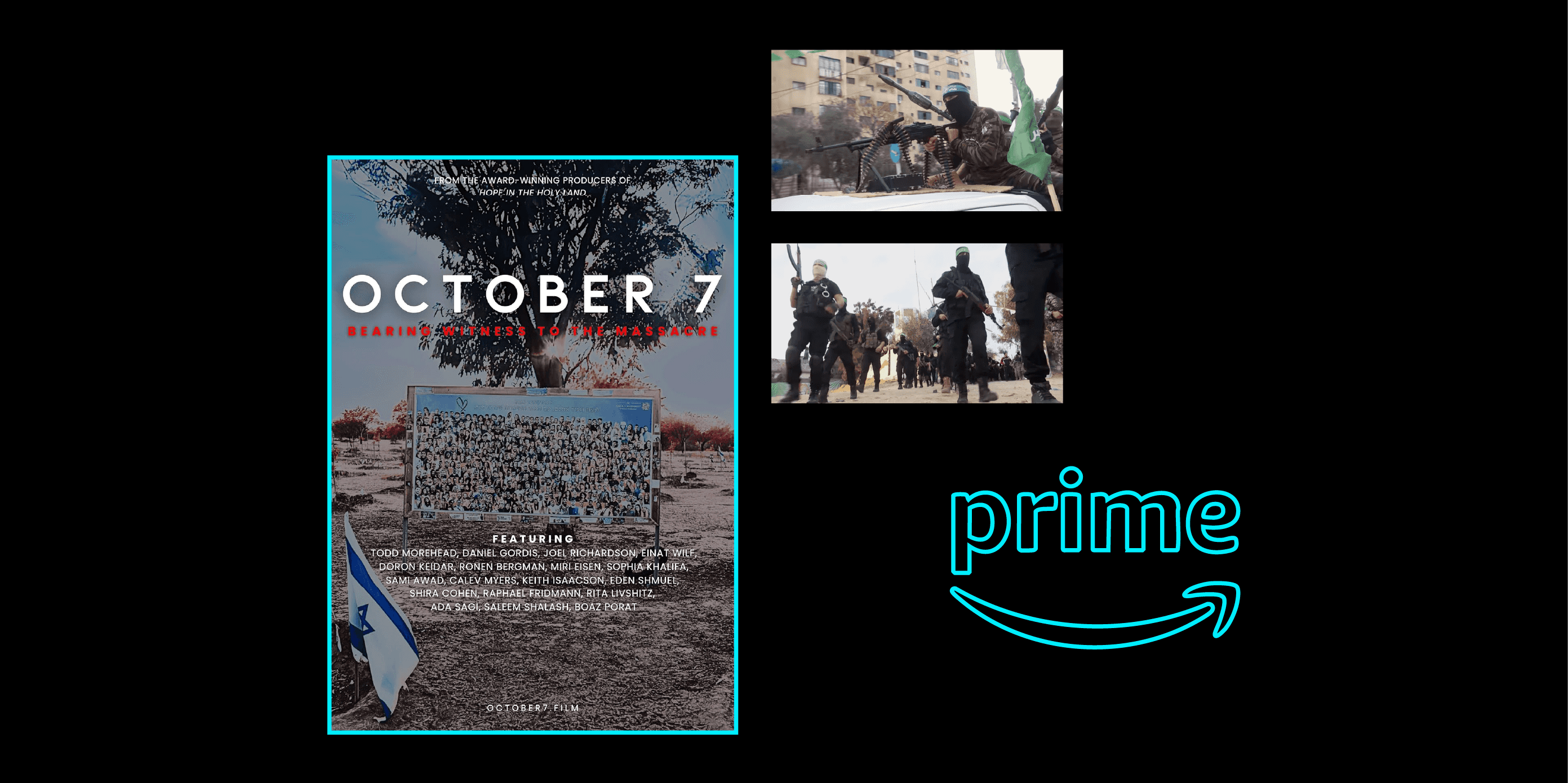
More recently, the IDF has even produced its own documentaries. A stark example is Bearing Witness to the October 7th Massacre (2023), a 47-minute film produced by the IDF Spokesperson’s Unit that compiles raw footage of Hamas’s purported attack on Israeli civilians 56. Israeli authorities held private screenings of this graphic film for journalists, diplomats, and even Hollywood executives “to garner support…and to deflect criticism of Israel’s actions in Gaza” 57.
Portrayal of Palestinians and the occupation in state-supported Israeli films tends to reinforce the official narrative. Often, these works humanize Israeli soldiers and officials, while Palestinians appear only as background threats or “terrorists.” A critique in The New Arab observed that many popular Israeli dramas and spy thrillers on platforms like Netflix are suffused with “human feelings humanizing the roles of soldiers and spies…while ignoring the real reasons behind the events” 58.
The overarching hasbara (public diplomacy) template is to frame Israel’s use of force as righteous self-defense against irrational “evil”, with Palestinians cast as aggressors or obstacles to peace. By omitting context (such as the occupation’s realities or settler violence) and focusing on Israeli protagonists’ moral dilemmas, such films essentially sanitize state violence. This pattern drew sharp criticism from Palestinian advocates, who argue that streaming platforms have become “a haven…to serve Israeli propaganda, while turning a blind eye” to Palestinian suffering 59.
State partnerships with filmmakers extend beyond borders. Israel has leveraged international co-productions and distribution to push its viewpoint. In the United States, pro-Israel narratives cultivated via movies like Exodus profoundly swayed public opinion. David Ben-Gurion, former Prime Minister of Israel, reportedly said that Uris’s novel (and by extension the film) was “not much as literature, but as propaganda, it’s the greatest thing ever written about Israel. 60”
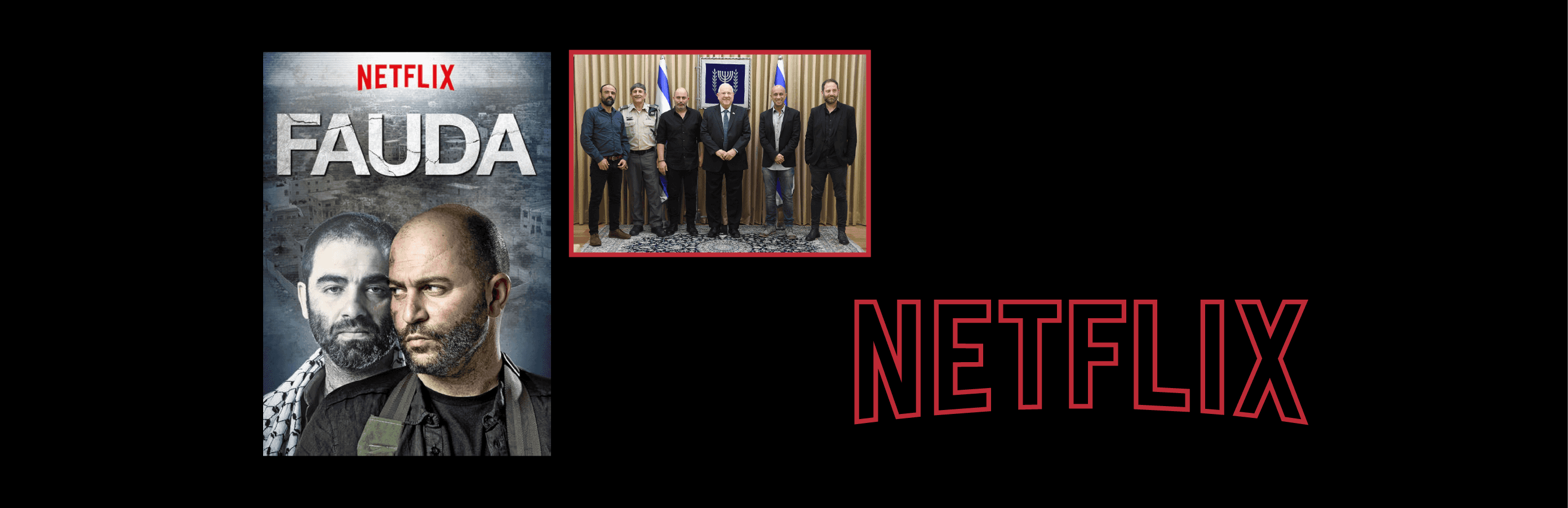
More recently, Israeli creators (often ex-military personnel) have found success abroad with series that double as slick propaganda for streaming platforms. The TV series Fauda (an Israeli production later streamed globally) was criticized for glorifying undercover IDF units hunting “terrorists” in the West Bank, largely erasing the occupation’s context 61.
Similarly, the Netflix miniseries The Spy (2019) celebrated an Israeli agent in 1960s Syria with no mention of Israel’s regional meddling 62, inaccurately presenting him as a patriot defending his nation. Such entertainment, though not directly state-produced, aligns with official narratives and has even been promoted by Israeli diplomacy. (Israeli embassies often host film festivals or Netflix launch events to showcase these productions as cultural achievements. 63)
Observers note that these platforms help export Israel’s messaging: the world is shown Israel’s feared enemies (whether Hamas, Hezbollah, or generic Arab militants) through a lens that emphasizes Israeli heroism and restraint, implicitly, or explicitly, justifying harsh military measures. Digital content has thus become an adjunct to Israel’s propaganda machine, complementing traditional hasbara efforts 64.
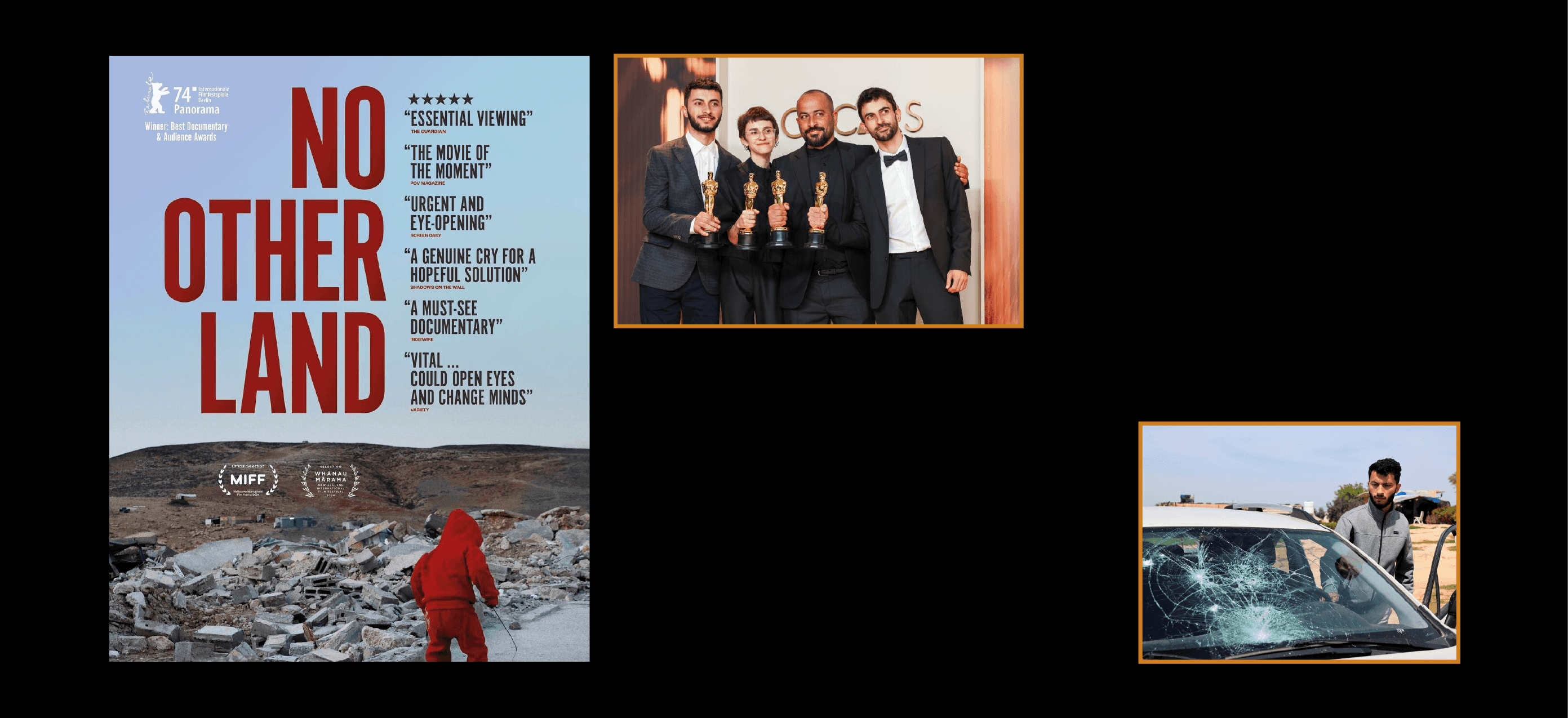
An interesting example from more recent times involves a documentary by a joint Palestinian-Israeli team about nonviolent resistance to West Bank home demolitions, No Other Land (2025). When it won an Oscar, Israel’s culture minister Miki Zohar blasted the filmmakers for “amplifying narratives that distort Israel’s image” and called their Academy Award “a sad moment for the world of cinema. 65” He labeled the film’s global recognition a form of “sabotage” against Israel’s reputation, especially amid the then-ongoing war with Hamas. Zohar also bragged that his ministry had recently changed public film funding to “dry up support” for such documentaries, calling the domestic film industry “an industry that builds its career on slandering Israel on the global stage. 66”
Indeed, new guidelines in 2023-24 now prioritize commercial, apolitical films (judged by box-office potential) over “arthouse” projects that tackle sensitive historical or human-rights issues. At the same time, the government boosted funding for films by settlers in the West Bank, effectively subsidizing content that celebrates the settlement enterprise, which films like No Other Land criticize.
Nonetheless, human rights groups and Palestinian advocates continue to challenge Israeli propaganda in film. They point out that even as Israel’s government invests in polished messaging and military-approved movies, reality finds a way through independent films, often forcing difficult conversations abroad.
Conclusion
Films, especially big, popular films, backed by the biggest studios in the world that carry great financial heft and power, are invariably intertwined with capitalist forces that are not eager to threaten the prevailing order. In the current climate of growing global fascism, they serve as soft power arms of the government, legitimizing and paving the way for state-sponsored brutalities, particularly by the army and the police.
The public image of cinema is glamor and art, but peeling back the curtain reveals “a murkier issue of the close relationship between Hollywood and the US government,” or between Bollywood and Hindu nationalist politicians, or between national film industries and foreign benefactors. At times, as we’ve seen, these relationships produce outright propaganda films. At other times they produce entertainment that just happens to reinforce the status quo. The mechanisms of influence range from overt to subtle.
In an age of streaming and international co-productions, propaganda in film is arguably more dangerous than the blunt force days of old. It can fly under the radar, embedded in what looks like an exciting, slick, thriller or historical drama, reaching far wider audiences than a clunky newsreel ever could. The networks behind it (ideologically driven financiers, overseas influencers, domestic censors) remain mostly invisible to the average viewer. As consumers of media, understanding this landscape is vital.
If there is a silver lining, it’s that awareness of these networks can foster critical viewing. Filmmakers with integrity around the world also continue to resist and expose these machinations, often at great personal risk, by making films that contest dominant narratives such as the Latin American filmmakers who championed the revolutionary third cinema movement.
The story of right-wing and authoritarian influence on film is both a cautionary tale and an affirmation of film’s power. Authoritarians wouldn’t obsess over controlling cinema if it wasn’t so effective at shaping and influencing minds, young and old. By shining light on secret funding deals, cross-border propaganda circuits, and narrative trickery, we can perhaps better understand when a film is enriching our perspective or trying to commandeer it.


